
Quick facts
- Cost
- Free (self-guided)
- Getting there
- Compact, walk-first center
- Good to know
- Pick one route theme + one anchor meal; leave the rest optional



How to Use These Routes (So They Feel Effortless)
Tallinn is compact, which makes it tempting to "just wander." That works — but your best day happens when you choose one route theme and commit to it.
Simple rule: pick one anchor walk + one anchor meal. Everything else is optional.
- For your first day, start with the Old Town loop.
- For your second day, choose either Kadriorg (elegant + green) or Telliskivi/Kalamaja (creative + local).
- Add sea air when you want your day to feel bigger: Pirita or Noblessner.
A note on terrain: Tallinn's Old Town and Toompea are paved in cobblestones — beautiful, atmospheric, and genuinely hard underfoot over a long day. Wear shoes with some grip and cushioning. The Toompea climb is short (5 minutes) but the stones are uneven and can be slippery when wet. Kadriorg's park paths are smooth gravel. Pirita's promenade is flat and paved.
Route 1: Old Town Loop (Classic, Easy, Beautiful)
Distance: ~3–4 km · Time: 2–3 hours at a relaxed pace · Terrain: cobblestones, some uphill to Toompea
This is the essential Tallinn walk — the one everyone should do first.
Start: Viru Gate — enter through the 14th-century gatehouse from the east. The two towers frame your first view of the Old Town perfectly.
Walk west through Viru Street into the Lower Town. The main commercial lane is lively; the alleys branching off it are quiet and worth exploring. Turn south toward St. Catherine's Passage (Katariina käik) — a narrow medieval alley lined with artisan workshops. Spend a few minutes here; it's one of the most atmospheric corners in the Old Town.
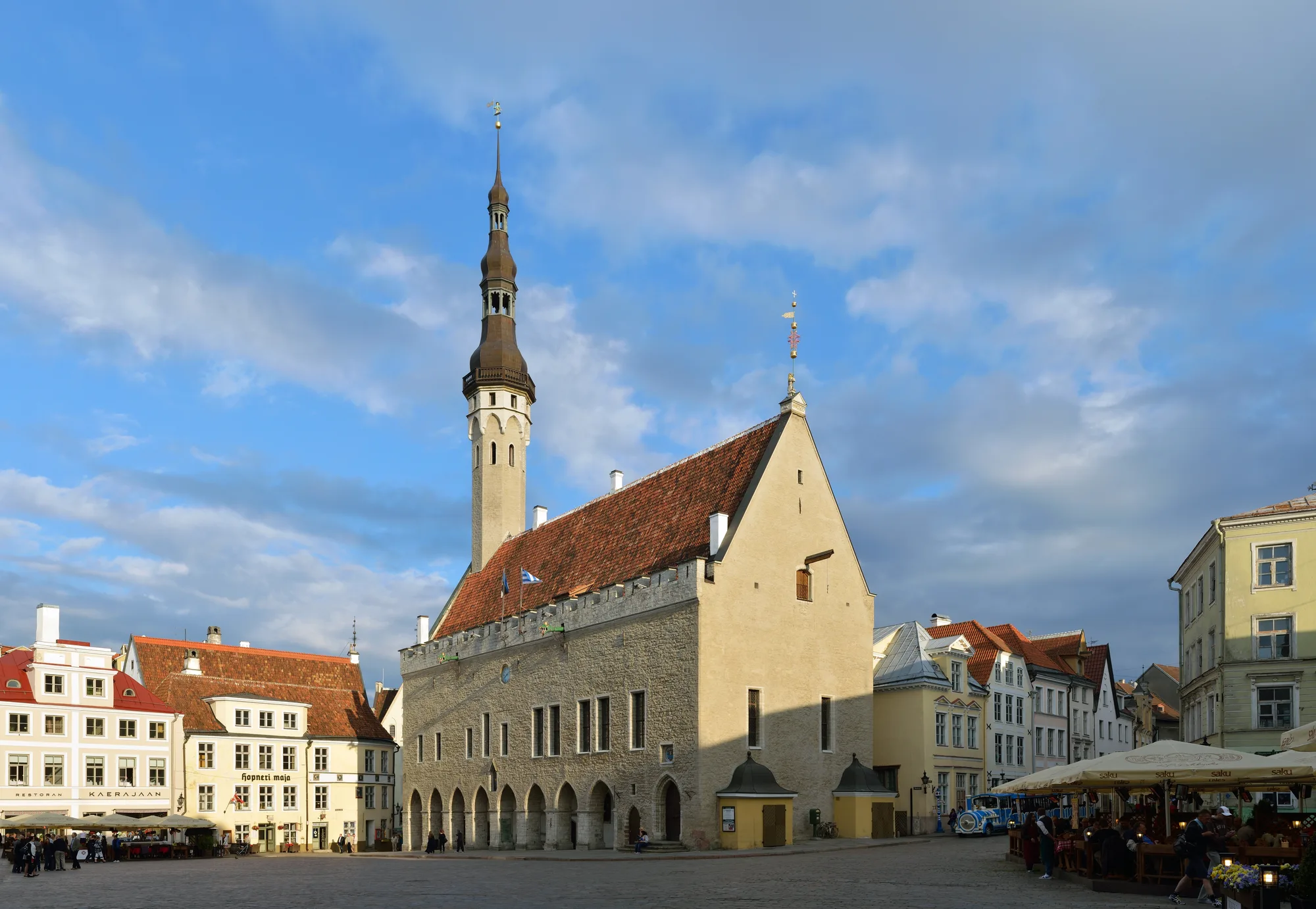
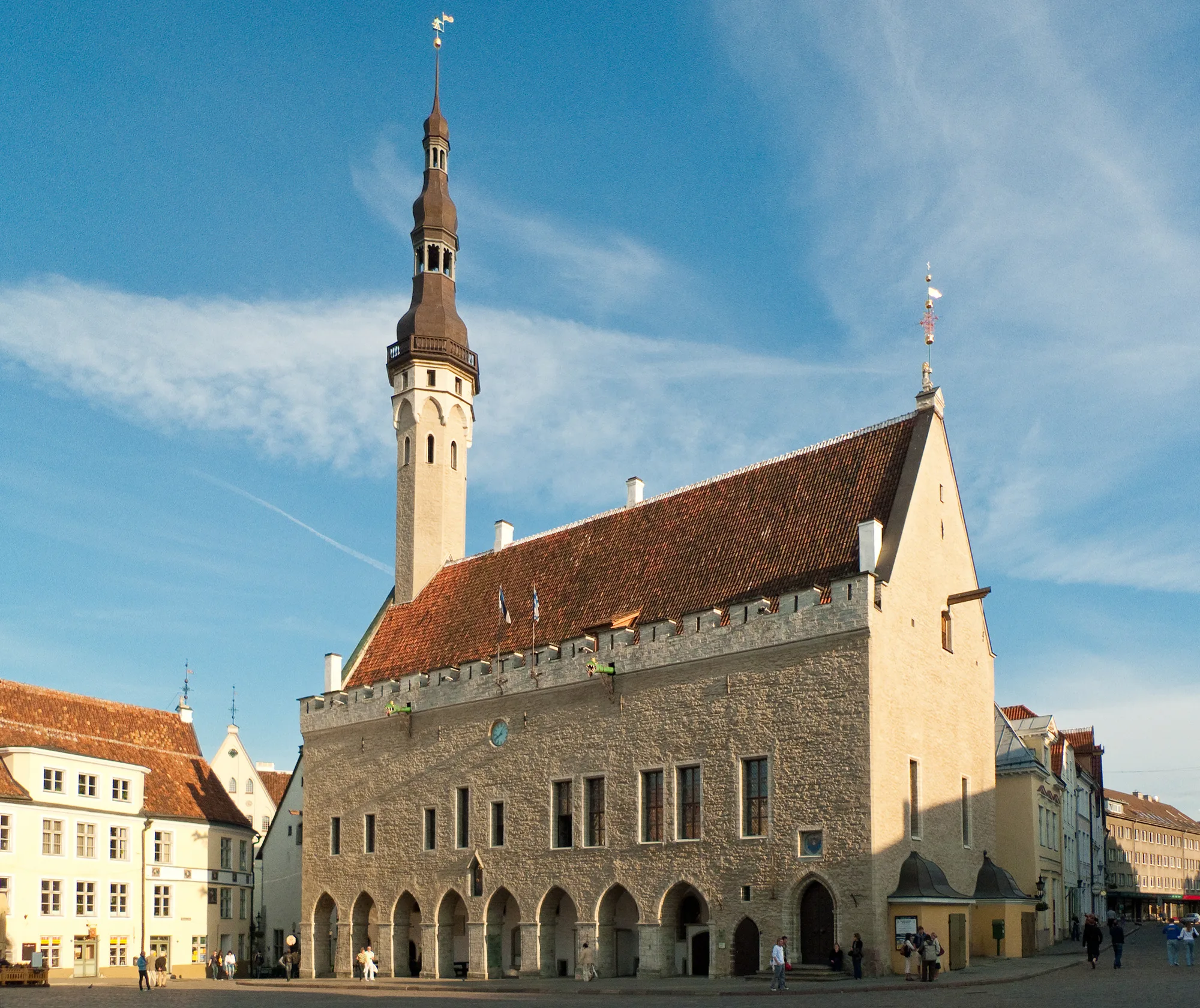
Continue to Town Hall Square (Raekoja plats). The Gothic Town Hall dates to the 15th century. Look up at the buildings around the square — then find a café table if you want a rest before the hill.
From the square, walk northwest and begin the climb to Toompea via Pikk jalg (Long Leg) — the curving cobblestone lane that takes you up to the upper city. At the top: the Alexander Nevsky Cathedral (Russian Orthodox, 1900, the dominant onion-domed presence on Toompea), Toompea Castle with the Pikk Hermann Tower, and the Danish King's Garden — a peaceful terraced garden tucked against the castle walls.
Best photo moments: Do both viewpoints. Kohtuotsa gives the classic panorama — open, direct, with the red-tiled rooftops of the Lower Town spread below. Patkuli is more dramatic, with the medieval walls in the foreground and the lower city beyond. Both are free.
Descend via Lühike jalg (Short Leg) back into the Lower Town and walk a circuit through whichever lanes you haven't explored yet.
Best time: Early morning (before 10:00) for empty streets and calm light. Golden hour (30–60 min before sunset) for the most cinematic atmosphere at the viewpoints.
Pair with: Tallinn Old Town Walking Tour (the dedicated route guide) · Best Viewpoints in Tallinn.
Route 2: Golden Hour / Sunset Loop (Cinematic Tallinn)
Distance: ~2 km · Time: 1.5–2 hours · Terrain: mostly flat, one short uphill
This walk is designed for one thing: experiencing Tallinn at its most beautiful light. Plan it for 60–90 minutes before sunset.
Start: Walk up to Toompea in the late afternoon and begin at Kohtuotsa Viewing Platform. Arrive early enough to watch the light change over the Lower Town. The shift from afternoon to golden-hour light over the red rooftops and church spires is the image that defines Tallinn.
Walk a few minutes west along the Toompea ridge to Patkuli Viewing Platform for the second angle. The medieval walls drop steeply away here and the Lower Town is below in a different composition.
Descend after sunset via Pikk jalg. The Old Town in the early evening — warm lighting in restaurant windows, the lanes emptying of day visitors — has a completely different character to the afternoon. Walk slowly toward Town Hall Square and choose your end point: a candle-lit dinner, a bar, or dessert.
Best stop options: Kehrwieder for a warm chocolate moment · the Best Bars in Tallinn guide for a post-walk drink · Best Desserts in Tallinn for a sweet finish.
Pairs with: Romantic Places in Tallinn · Sunset Spots in Tallinn.
Route 3: Toompea Deep Dive (History + High Ground)
Distance: ~1.5 km · Time: 1.5–2.5 hours · Terrain: uphill approach, then flat on the hill
Most visitors pass through Toompea on the way to the viewpoints. This route treats it as a destination in itself.
Start: Climb to Toompea via Pikk jalg (the Long Leg lane from the Lower Town). At the top, begin a clockwise circuit of the hill.
First stop: Toompea Castle and the Pikk Hermann Tower. The tower flies the blue-black-white Estonian flag. The castle complex today houses the Riigikogu, Estonia's parliament — one of the few medieval fortifications in Europe still in active governmental use.
Walk to the Alexander Nevsky Cathedral — the Russian Orthodox cathedral built in 1900, at the height of Russian imperial influence over Estonia. Its visual dominance on the Toompea skyline is deliberate. Step inside if it's open; the interior is ornate and quiet.
Continue to St. Mary's Cathedral (Toomkirik) — one of Estonia's oldest churches, dating to the 13th century. It's Lutheran, low-key, and genuinely ancient. The contrast between the cathedral's restraint and the Orthodox church's visual drama — two buildings a short walk apart — tells the story of Tallinn's layered history compactly.
Pass through the Danish King's Garden — a peaceful terraced garden between the castle and the walls, a good spot to slow down.
Finish with both viewpoints: Kohtuotsa then Patkuli, and descend via Lühike jalg.
Pairs with: Neighborhoods: Toompea · Sights: Pikk Hermann Tower.
Route 4: Kadriorg + Kumu (Green + Cultural)
Distance: ~3–4 km inside the park · Time: half a day · Getting there: tram 1 or 3 from city centre (~15 min)
Kadriorg is Tallinn at its most elegant. Built by Peter the Great as a summer palace complex in the early 18th century, the park has matured into one of the most beautiful green spaces in the Baltics. Plan a slow morning here.
Start at the park entrance near Kadriorg Palace. The Baroque palace (now the Kadriorg Art Museum) is the centrepiece — even if you don't go inside, the building and its formal garden forecourt are worth a slow look.
Walk southeast through the park paths toward the Kadriorg Japanese Garden — a small, serene garden with stone lanterns, sculpted pines, and a reflective quality that rewards a few quiet minutes. It's less formal than the palace garden and has a completely different atmosphere.
Continue through the park to Kumu Art Museum — a short walk from the palace, set into a limestone cliff face. The building (opened 2006) is itself worth seeing as architecture; the collection covers Estonian art from the 18th century to the contemporary, with strong exhibitions. Allow 2–3 hours inside.
For a smaller extra stop: the Mikkel Museum near the palace has a focused collection donated by a private collector — porcelain, European drawings, and minor Dutch masters in an intimate setting.
After Kumu: walk north through the park toward the sea-facing edge, or take a tram further north toward Noblessner or Pirita for afternoon sea air.
Best in: spring (tulips, April–May) · summer mornings · autumn (golden leaves along the paths).
Route 5: Telliskivi Street Art + Kalamaja Wooden Houses
Distance: ~3 km · Time: 2–3 hours · Getting there: 10–15 min walk or short tram from city centre
This is the walk that shows you contemporary Tallinn rather than medieval or imperial Tallinn.
Start at Telliskivi Creative City — a former railway repair facility converted into a creative campus. The murals here are large-scale and regularly renewed; the alleys between the repurposed industrial buildings create natural gallery corridors. Alongside the art: independent design shops, coffee roasters, a vinyl shop or two, studio spaces with open doors. On weekend mornings there's a flea market in the central yard that locals genuinely attend.
Walk north or west from Telliskivi into Kalamaja. The transition is immediate: from industrial-creative energy to a quieter, older residential neighbourhood. Kalamaja is one of Tallinn's oldest wooden-house districts — rows of nineteenth-century timber buildings in faded pastels, leaning slightly, with cats on windowsills and gardens visible through gaps in fences. There's no real agenda here; the point is the neighbourhood rhythm.
For a longer route, continue north through Kalamaja toward the waterfront and Noblessner — the former submarine factory turned marina neighbourhood. The contrast between the wooden-house streets and the opened-up waterfront is striking.
Fuel stop: F-Hoone in Telliskivi is a reliable, relaxed café and restaurant in a converted industrial space. Balti Jaam Market beside the railway station is close by and good for a cheap, local lunch.
Pairs with: Neighborhoods: Telliskivi · Neighborhoods: Kalamaja · Design Shops in Tallinn.
Route 6: Seaside Walk — Pirita or Noblessner
Terrain: flat and paved (Pirita promenade) or mixed paths (Noblessner waterfront) · Best in: summer and early autumn
Tallinn's sea-facing edges have a completely different character to the inland city — open, windy, bright, and much less crowded.
Pirita (~6 km from city centre):
Pirita has a long sandy beach, a promenade that runs along the coastline, and the ruins of St. Bridget's Convent (Pirita Convent Ruins) — a substantial Gothic ruin on the road in. The beach is good for walking in any season; in summer it fills with swimmers and sunbathers. The Tallinn Botanical Garden is nearby for an extra stop. Getting there: bus from the city centre, about 15–20 minutes.
Noblessner (western waterfront):
Noblessner is a former imperial submarine factory complex, now a marina neighbourhood with a genuinely interesting mix of old industrial architecture, new restaurants, the Kai Art Center (contemporary art), and waterfront paths. Walking from the Old Town end of the waterfront through toward Noblessner gives you a series of different harbour views. The Linnahall — a massive Soviet-era concert hall and arena on the waterfront between the city and Noblessner — is one of Tallinn's most striking and melancholy structures: monumental, semi-abandoned, and oddly photogenic.
Pairs with: Beaches in Tallinn · Neighborhoods: Pirita · Neighborhoods: Noblessner.
Route 7: City Walls & Towers Walk
Distance: ~2 km along the surviving wall sections · Time: 1.5–2 hours · Terrain: flat, some steps
Tallinn's medieval city walls are one of the best-preserved in Northern Europe. Over 1.5 km of the original wall survives, along with towers that you can enter (some for a modest fee) and sections where you can walk along the top.
Start at Viru Gate — the eastern gateway — then walk south along the outer edge of the Old Town. The wall runs along what is now a park strip between the old city and the modern boulevards. Towers punctuate the route.
Fat Margaret (Fat Margaret) is the large round tower at the northern end, near the harbour — its name comes from the wide, squat cannon tower shape. Today it houses the Maritime Museum's flag collection and offers access to the tower top.
For the underground version of Tallinn's fortifications: book a Bastion Passages tour — guided tours through a network of 17th-century tunnels beneath the walls. This is one of the most distinctive experiences in Tallinn and not well known outside the city.
Pairs with: Sights: Viru Gate · Museums: Bastion Passages · Museums: Fat Margaret.
Bad-Weather Walking Strategy
On rainy or windy days, Tallinn still rewards walking — you just adapt the rhythm.
The "short hop" approach: one indoor anchor + one short outdoor connector, repeated. Move between sheltered interiors with brief outdoor stretches in between. You'll still get a real Tallinn day — just with warmer hands.
Good indoor anchors for grey days:
- Kumu Art Museum: easily 2–3 hours, excellent building.
- Seaplane Harbour: vast, covered, spectacular — and fascinating in any weather.
- Bastion Passages: underground, dramatic, and guided — perfect for a rainy afternoon.
- Niguliste Museum: medieval church art, intimate and warm.
- Fotografiska Tallinn: contemporary photography — good for a slow 90 minutes.
Short outdoor connectors: the walk between Viru Gate and Town Hall Square (5 min) is sheltered by buildings; the lane down to St. Catherine's Passage is covered in parts; the Lower Town lanes have overhanging eaves. You can do a surprisingly satisfying rainy-day Old Town walk using these sheltered stretches.
Full guide: Rainy Day in Tallinn.
Practical Walking Tips
Shoes matter more than you think. Tallinn's cobblestones are beautiful and genuinely hard to walk on for long stretches. Shoes with grip (not flat leather soles) and some underfoot cushioning make a real difference over 4–6 hours of Old Town walking. Heeled shoes are difficult; flat but cushioned is ideal.
Early morning is the unlock. The Old Town before 10:00 belongs to you. The same streets that feel congested at midday in July feel completely different at 08:30 — quieter, softer light, bakeries just opening. If you have any flexibility in your morning timing, use it.
Navigation: The Old Town is small enough that getting lost is temporary. You can walk corner-to-corner in about 15 minutes. Follow your instincts; most alleys lead somewhere interesting.
Water: Tallinn's tap water is safe to drink. Fill a bottle at your accommodation. Tallinn Tap Water.
Weather layers: Tallinn's weather shifts quickly, especially near the sea. A light waterproof layer is worth carrying in shoulder seasons. What to Pack for Tallinn.
Accessibility: The Old Town's cobblestones and uneven surfaces are difficult for wheelchairs and pushchairs. Kadriorg's park paths are easier. Pirita's promenade is flat and accessible. Getting Around Tallinn has more logistics.
Go here next
 Go here nextRomantic Places in TallinnThe most romantic Tallinn spots: Toompea viewpoints, Old Town lanes, Kadriorg park walks, seaside sunsets, and cozy winter corners.Go here nextFree Things to Do in TallinnA guide to free Tallinn: Old Town wandering, viewpoints, seaside walks, parks, creative neighborhoods, and atmospheric streets — with a simple planGo here nextStroomi Beach (Pelgurand)Stroomi is Tallinn’s easy, family-friendly city beach: a wide stretch of sand with a big park behind it, perfect for picnics, sea-air walks, and a low-effort
FAQ
Is Tallinn good for walking?
Yes — the Old Town is extremely compact and walkable. The main streets and lanes are all on foot. Kadriorg, Telliskivi/Kalamaja, and the waterfront areas are also good walking destinations, connected to the centre by short tram or bus rides.
How long does the Old Town walking loop take?
A relaxed Old Town loop including Toompea and both viewpoints takes about 2–3 hours. If you add museum stops or spend time in cafes, plan for a half day.
Are the cobblestones in Tallinn's Old Town difficult to walk on?
They can be, especially over several hours. Wear shoes with grip and some cushioning underfoot. The Toompea climb is short but the stones are uneven. Flat leather-soled shoes or heels are not recommended.
What is the best walking route in Tallinn for a first visit?
The Old Town loop: Viru Gate → Town Hall Square → St. Catherine's Passage → Toompea → Kohtuotsa viewpoint → Patkuli viewpoint → back down. It covers the essential Tallinn experience in 2–3 hours.
Can you walk from the Old Town to Kadriorg?
You can, but it takes about 30–40 minutes on foot. Most visitors take trams 1 or 3, which cover the distance in about 15 minutes.