
Quick facts
- Best for
- Rainy or windy days; culture lovers; families (Seaplane Harbour + Open Air Museum especially)
- Good to know
- Plan one big museum plus one neighborhood; check the Tallinn Card for bundles; book Bastion Passages and KGB Museum tours in advance


How to Think About Tallinn's Museums
Tallinn punches well above its size when it comes to museums. The city has around 50 museums and galleries — from the grand Kumu Art Museum in Kadriorg to tiny Old Town curiosities like the Town Hall Pharmacy, which has been dispensing remedies since the 15th century. Rather than trying to visit everything, the most satisfying approach is to pick a cluster and give it proper time.
The museums broadly divide into four groups:
- Art museums (Kadriorg cluster): Kumu, Kadriorg Art Museum, Mikkel Museum — all within walking distance in the Kadriorg park area. These are Estonia's national-level art institutions and genuinely world-class.
- Maritime and waterfront (Noblessner area): Seaplane Harbour (Lennusadam) is the flagship — a spectacular converted hangar filled with historic seaplanes, submarines, and a full-size icebreaker you can board. Kai Art Center and PROTO Invention Factory complete the creative waterfront cluster.
- Old Town history and medieval (Lower Town): Great Guild Hall, Niguliste Museum (medieval church art), Kiek in de Kök fortification tower, Bastion Passages (underground tunnels), and the Town Hall Pharmacy. These reward visitors who want to understand the layers of the medieval city.
- 20th-century history: Vabamu (Occupations and Freedom Museum), the KGB Museum at Hotel Viru (guided tours only), and KGB Prison Cells — for a sobering and essential understanding of Estonia's 20th-century experience under Soviet occupation.
A Short List That Covers a Lot
If you only have time for a few, these four cover the full range of Tallinn's museum offer:
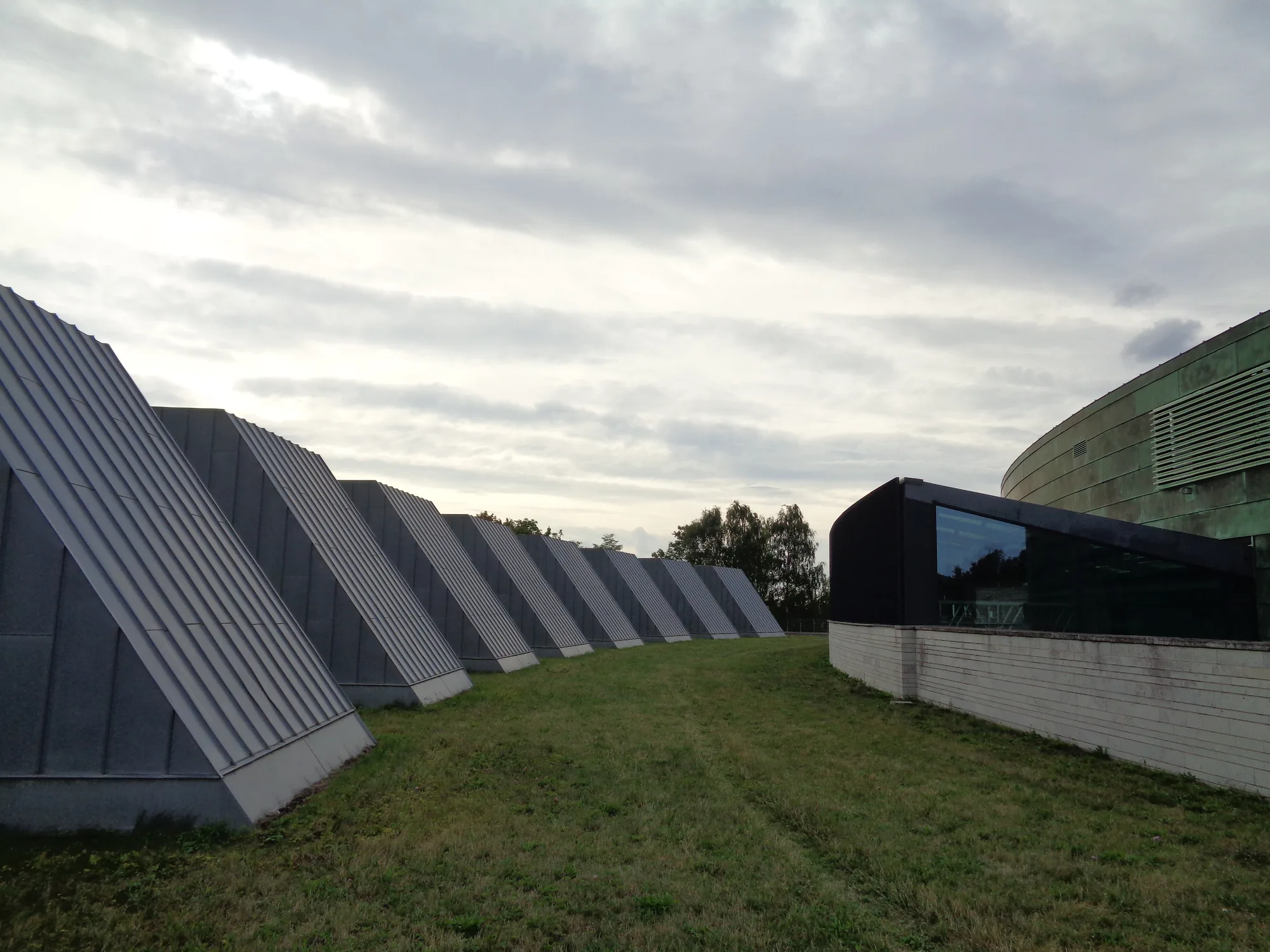
- Kumu Art Museum — Estonia's national art museum, outstanding building, excellent permanent collection spanning Estonian art from the 18th century to the Soviet period and beyond. In Kadriorg.
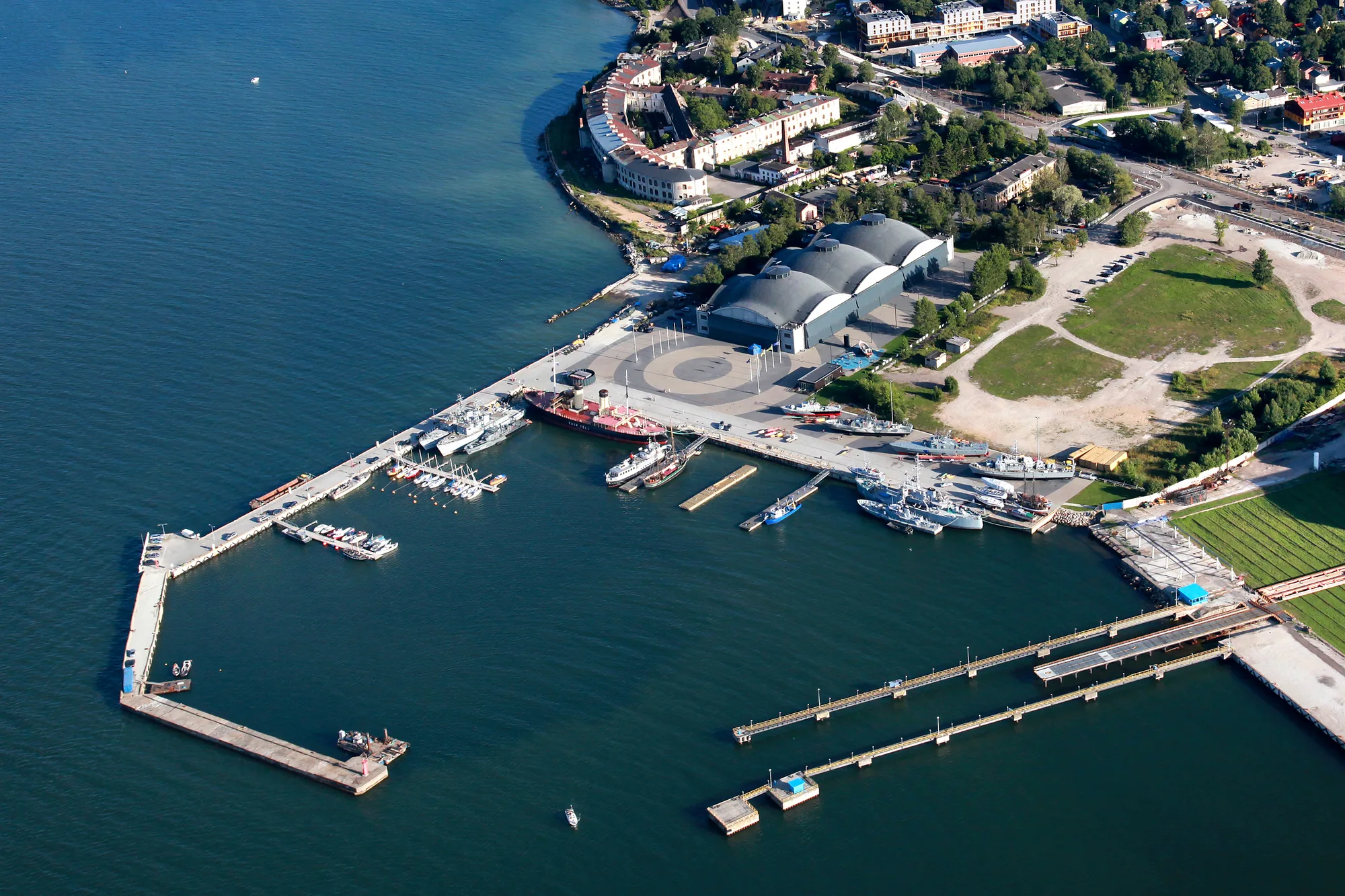
- Seaplane Harbour — the most dramatic museum space in Tallinn, housed in a century-old seaplane hangar on the northwest waterfront. The icebreaker Suur Tõll and the submarine Lembit are both explorable. Allow 2–3 hours.
- Vabamu — the Occupations and Freedom Museum gives essential context for understanding Estonia's Soviet and German occupation periods. Thoughtful, well-curated, and not to be skipped.
- Bastion Passages — guided tours through the 17th-century underground tunnel network beneath the Old Town fortifications. Atmospheric and genuinely interesting for history and architecture lovers.
Other strong picks: Niguliste Museum for medieval church art in a beautiful Gothic setting; Town Hall Pharmacy (Raeapteek) for Old Town curiosity; Fotografiska Tallinn in Telliskivi for contemporary photography.
Pick a Museum Cluster (So the Day Flows)
Tallinn's museums cluster geographically, which makes planning intuitive:
Kadriorg cluster (art + park): Take tram 1 or 3 east from the center. Give yourself a full morning or afternoon for Kumu, then walk through the park to Kadriorg Art Museum inside the Baroque palace, and add the compact Mikkel Museum if you have time. Finish with a walk through the Japanese Garden and catch the tram back.
Old Town history cluster (medieval vibes): Base yourself in the Lower Town. Start at Great Guild Hall for a broad overview of Tallinn's merchant history, then go underground at Kiek in de Kök + Bastion Passages (book together), and end with Niguliste Museum for the medieval church art and silver treasury. A great rainy-day combination.
Modern history (20th-century context): Vabamu for the full occupations story; add the KGB Museum (Hotel Viru) for a guided Cold War exploration of the former Intourist hotel's secret surveillance floor; and KGB Prison Cells for a sobering, quiet visit to a former detention space.
Waterfront modern culture: Seaplane Harbour as the anchor, then Kai Art Center for contemporary art exhibitions and PROTO Invention Factory for interactive innovation culture. Finish with a sunset walk in Noblessner.
Best Museums for Rainy Days (Or Windy Winter Weather)
Tallinn's weather can be changeable, especially outside summer. These are the highest-quality, full indoor picks for a grey or wet day:
- Seaplane Harbour — big, cinematic, interactive, and genuinely fun for all ages. Allow 2–3 hours minimum.
- Kumu — the architecture alone is worth an hour. The permanent collection can fill a full morning.
- Energy Discovery Centre — hands-on science museum, excellent for curious minds and families. Central location.
- Estonian Health Museum — approachable, central, and surprisingly engaging.
- Natural History Museum — compact and family-friendly, right in the Old Town.
For a full indoor itinerary, see Rainy Day in Tallinn.
Practical Tips (Tickets, Timing, and Easy Logistics)
Tallinn Card: If you plan to visit multiple museums in a day or two, compare entry costs against the Tallinn Card bundle. It includes free entry to many of the major attractions and free public transport — worth calculating if you're museum-heavy.
EKM shared ticket: The Estonian Art Museum (EKM) runs Kumu, Kadriorg Art Museum, Mikkel Museum, Niguliste Museum and the Adamson-Eric Museum on one shared ticketing system, so a combined ticket can cover several sites — useful if you plan to visit more than one. It's worth a quick look at the current offer on the museum websites when you book.
Booking: Bastion Passages and the KGB Museum at Hotel Viru are guided-tour only and can sell out, especially in summer — book ahead via their websites. Most other museums operate walk-in entry.
Getting between clusters: For Kadriorg, take tram 1 or 3 from the center (about 10 minutes). For Noblessner and Seaplane Harbour, tram 2 or a walk from Telliskivi. Old Town museums are all walkable from each other. See Tallinn Public Transport Tickets for how tickets work.
With kids: Plan one museum and one park or outdoor activity per day — the city is perfect for that rhythm. See Tallinn With Kids for a family-optimized plan.
If You Want Fresh Air and Culture Together
Not every museum day has to be indoors. For a slower, walk-heavy day, try the Estonian Open Air Museum at Rocca al Mare — especially good in spring and summer. It's a sprawling collection of authentic 18th-to-20th-century rural buildings (farmsteads, windmills, a chapel, a fire station) set in a forest by the sea. Allow a full half-day.
The Kalamaja Museum is a small, neighborhood-scale museum in the wooden-house district — good for getting context on how Tallinn's most characterful neighborhood developed, and it pairs naturally with a Kalamaja wander afterward.
How to Plan a Museum Day
The best museum days combine one anchor institution with one neighborhood. These pairings work beautifully:
- Kumu + a long Kadriorg park walk and tram home
- Seaplane Harbour + sunset at Noblessner
- Bastion Passages + an Old Town evening wander afterward
- Vabamu + Freedom Square + dinner in the Old Town
- Open Air Museum + a drive or bus ride back along the coast
Resist the urge to over-schedule. One major museum plus a neighborhood is usually more satisfying than three museums back-to-back.
Museum FAQ
Do Tallinn museums accept card payments? Yes — virtually all major museums and galleries accept card. Cash is rarely needed but can be useful at smaller venues. See Money in Tallinn for the broader picture.
How long does Kumu take? The permanent collection alone takes 1.5 to 2 hours; a full visit with temporary exhibitions is typically 2.5 to 3 hours. Build in time for the building itself — the architecture is a highlight.
Is Seaplane Harbour good for kids? Yes — it's one of the best family museum choices in the city. The scale is impressive (the seaplane hangar is vast), there's an icebreaker and a submarine to explore, and the interactive elements hold children's attention well.
What's the difference between Kiek in de Kök and Bastion Passages? Kiek in de Kök is the tower museum with exhibits on Tallinn's medieval and early modern fortifications. Bastion Passages are the underground tunnels beneath the fortifications, accessible via guided tour. Both share a combined ticket and work well visited together.
Understanding Estonian History Through Its Museums
Tallinn's museums tell an extraordinarily layered history. The city has been part of the Livonian Confederation, the Polish-Lithuanian Commonwealth, the Swedish Empire, the Russian Empire, an independent republic (1918–1940), then occupied by the Soviet Union, briefly by Nazi Germany, and then by the Soviet Union again — before recovering independence in 1991. Each of these periods left physical traces on the city and stories that the museums interpret.
For a first-time visitor trying to understand why Tallinn is the city it is, three museums are most essential:
Vabamu (Museum of Occupations and Freedom): Covers the Soviet occupation (1940–1941, 1944–1991) and German occupation (1941–1944) with contemporary, thoughtful curation. Does not shy from the difficult material — the deportations, the resistance, and the restoration of independence are all treated with depth. One of the best occupation museums in any post-Soviet country.
KGB Museum (Hotel Viru): The former Intourist hotel Viru was built as the 'tourist hotel' for Soviet-era visitors — and was comprehensively surveilled. The secret floor at the top of the building, discovered only after independence, is accessible via guided tour and gives a vivid, visceral impression of Cold War surveillance culture. Book well in advance.
Great Guild Hall (Estonian History Museum): A broader sweep of Estonian history from prehistoric times through the 20th century, housed in one of the most beautiful medieval buildings in the Old Town. Good for establishing context before visiting the more thematically specific museums.
Estonian Art: A Brief Orientation for Museum Visitors
Estonian visual art has a strong identity that rewards attention. The permanent collection at Kumu Art Museum is the best place to encounter it in depth.
A few key things to know before you walk in:
The national romantic period (late 19th to early 20th century): Estonian artists in this era were actively developing a visual language tied to the land, the sea, and folklore — parallel to the national awakening in literature and music (the song festivals). The landscape paintings and portraits of this period are some of the most loved works in Estonian culture.
The Soviet period: Estonian art under Soviet occupation is a fascinating and complex area. Some artists found ways to maintain aesthetic independence within ideological constraints; others worked in official Soviet realism; still others developed a quiet abstraction that was tolerated but not celebrated. Kumu handles this period thoughtfully.
Contemporary Estonian art: A vibrant scene, particularly in photography (Fotografiska Tallinn is the main contemporary photography institution), graphic design, and digital media. The Kai Art Center in Noblessner hosts rotating contemporary exhibitions with an international focus.
The Adamson-Eric Museum in the Old Town is dedicated to one of Estonia's most versatile 20th-century artists — a painter, ceramicist, and applied-arts designer — and is housed in a beautiful small Old Town building.
Museums for Families and Children
Tallinn has several excellent museum options for families with children. The city's compact geography and walkable neighborhoods make a museum morning plus a park afternoon a very natural structure for a family day.
Best museum choices for children:
- Seaplane Harbour: The top pick for children of all ages. The scale is impressive, the aircraft and submarine are exciting to explore, and the interactive elements are well-designed. Allow at least 2 hours.
- Energy Discovery Centre: A hands-on science museum close to the Old Town, with interactive exhibits covering physics and natural science. Particularly good for children aged 6 to 14.
- Natural History Museum in the Old Town: Compact and approachable, with good exhibits on Estonian fauna and geology.
- Children's Museum Miiamilla: A dedicated children's museum in Kadriorg, designed for young children. Best for families with children under 8.
- Estonian Open Air Museum: The outdoor setting, with farmhouses, animals, and open spaces, makes this particularly good for children who need room to roam. Allow a full half-day.
For a complete family itinerary: Tallinn With Kids.
Getting Value from Your Museum Budget
Museum entry costs in Tallinn are generally very reasonable by Western European standards. A few ways to maximize value:
Tallinn Card: If you plan to visit three or more major attractions in 24 to 48 hours, the Tallinn Card typically pays for itself. It includes entry to Kumu, Seaplane Harbour, Kadriorg Art Museum, Bastion Passages, Kiek in de Kök, and other major museums, plus free public transport. See Tallinn Card for the current offering — do the math against your specific itinerary.
EKM family ticket: The Estonian Art Museum runs a combined ticket covering Kumu, Kadriorg Art Museum, Mikkel Museum, and Miiamilla. If you plan to visit two or more of these, the combined ticket saves money. Check the current pricing directly with the museums (it can change).
Free entry options: Several museums offer free entry on specific days or times — Kumu, for example, has had free entry on specific occasions. Check museum websites before visiting as these policies change. Many smaller museum spaces in the Old Town (such as church interiors) are free or donation-entry.
Booking in advance: For guided-tour-only venues like KGB Prison Cells and KGB Museum at Hotel Viru, booking online in advance is essential in summer. Walk-in is often not possible at peak times.
Museum Architecture Worth Noticing
Tallinn's museum buildings are themselves worth attention as architecture. Several are among the most significant buildings in the country.
Kumu Art Museum (2006, Pekka Vapaavuori): A striking limestone-clad building that descends into the hillside of the Kadriorg park. The terraced design integrates the building into the landscape while creating a sequence of generous gallery spaces. It has won multiple international architecture awards and is justifiably considered one of the finest museum buildings in the Baltic region.
Seaplane Harbour (Lennusadam) (1917, original engineers unknown): The three reinforced-concrete shell domes that form the seaplane hangar are an engineering achievement — among the first of their type when constructed, and still spectacular over a century later. The relationship between the industrial structure and the vessels inside it is one of the most powerful spatial experiences in any Estonian museum.
Vabamu Museum (2003, renovation and extension): A modern intervention on a historical building at the edge of the Old Town, with thoughtful spatial sequencing that mirrors the emotional weight of the content.
Kadriorg Palace (1718–1736, Nicola Michetti): A Baroque palace built for Tsar Peter the Great, now housing the Kadriorg Art Museum. The pale pink facade, formal garden, and fountain create one of the most picturesque architectural settings in Tallinn.
Map
Tap markers to open linked guides.
Scroll to load the map
Map data © OpenStreetMap contributors, served by OpenFreeMap.
In this section
Place
Kumu Art Museum
Kumu is Tallinn’s flagship art museum in Kadriorg. Here’s how to visit, what to expect, and how to pair it with a perfect park day in Kadriorg.
Place
Seaplane Harbour (Maritime Museum)
Tallinn’s Seaplane Harbour is a standout maritime museum in a spectacular hangar setting — perfect paired with a modern waterfront afternoon in Noblessner.
Place
Bastion Passages (Underground Tallinn)
Explore Tallinn underground: the Bastion Passages reveal a hidden layer of city history beneath the streets — a unique, atmospheric experience for curious
Place
Town Hall Pharmacy (Raeapteek)
Raeapteek, Tallinn’s historic Town Hall Pharmacy, is a small Old Town stop with deep history.
Place
Fotografiska Tallinn
Fotografiska Tallinn is a modern photography museum in Telliskivi. Here’s how to visit, what to pair it with, and how to make it part of a creative-city
Place
Vabamu: Museum of Occupations and Freedom
Vabamu offers deep context for Estonia’s modern history. Here’s how to include it in a Tallinn itinerary with space to reflect — plus what to pair
Place
Kiek in de Kök Museum
Kiek in de Kök is one of Tallinn’s most iconic historic museum sites — closely connected to the city’s fortifications and the underground Bastion Passages.
Place
Niguliste Museum (St. Nicholas’ Church)
Niguliste Museum is medieval art inside a historic church — one of the most atmospheric museum stops in Tallinn’s Old Town, with altarpieces, sacred art
Place
Kadriorg Art Museum (Kadriorg Palace)
Kadriorg Art Museum brings European and Russian art into a baroque palace setting in Kadriorg Park — an elegant, unhurried museum day with gardens, fountains
Place
Mikkel Museum
The Mikkel Museum is a small, quietly impressive museum in Kadriorg Park built around a private collection — a lovely stop if you like intimate galleries
Place
Adamson-Eric Museum
The Adamson-Eric Museum is a compact Old Town art museum dedicated to one of Estonia’s best-known modernist artists — a quiet, thoughtful stop
Place
Fat Margaret (Estonian Maritime Museum)
Fat Margaret is a landmark defensive tower at Tallinn’s Great Coastal Gate — now part of the Estonian Maritime Museum, blending Old Town history with harbor
Place
Great Guild Hall (Estonian History Museum)
The Great Guild Hall is one of the most impressive medieval interiors in Tallinn — a Hanseatic-era merchant building that adds real depth to any Old Town walk.
Place
Peter I House Museum (Peter the Great)
Peter I House Museum is a small wooden house museum in Kadriorg connected to Peter the Great and Catherine I — an offbeat history stop that pairs perfectly
Place
Estonian Open Air Museum (Rocca al Mare)
The Estonian Open Air Museum is a wide, peaceful museum landscape of historic farm buildings, village life, and coastal forest — a perfect half-day when you
Place
PROTO Invention Factory
PROTO is a hands-on ‘invention factory’ in Noblessner: interactive exhibits, playful tech, and a great rainy-day or family-friendly option beyond the Old Town.
Place
Energy Discovery Centre
Energy Discovery Centre is an interactive science museum in a historic power station building — a fun Tallinn indoor pick for curious travelers, families
Place
KGB Prison Cells (Pagari Street)
The KGB Prison Cells are a sobering Tallinn history stop at Pagari Street — a small museum experience that adds depth to Estonia’s 20th‑century story.
Place
KGB Museum (Hotel Viru)
The KGB Museum at Hotel Viru is a guided visit into Tallinn’s Cold War layer — a behind‑the‑scenes look at surveillance history in the city’s most famous
Place
Estonian Health Museum
The Estonian Health Museum is an interactive, curiosity-friendly museum in Tallinn’s Old Town — a strong rainy-day choice with exhibits about the human body
Place
Estonian Museum of Natural History
The Estonian Museum of Natural History is a compact, family-friendly museum in Tallinn’s Old Town — a great rainy-day choice if you want nature and science
Place
Museum of Estonian Architecture
The Museum of Estonian Architecture is a design-forward Tallinn museum in the Rotermann Quarter — a great stop for architecture lovers and a smart indoor add-on
Place
Kalamaja Museum
Kalamaja Museum is a small neighborhood museum focused on everyday local life — a great add-on to a Kalamaja/Telliskivi day when you want context
Place
Tallinn City Museum
Tallinn City Museum is a great ‘context’ museum for first-time visitors — a clear way to understand the city’s timeline beyond the Old Town postcard lanes.
Place
Children’s Museum Miiamilla
Children’s Museum Miiamilla is a family-friendly museum stop in Kadriorg — a great option if you want a kid-centered activity that still fits a beautiful
Place
Kai Art Center (Noblessner)
Kai Art Center is a contemporary art venue in Noblessner — a great place to catch a modern exhibition and then step straight into sea air and waterfront
