
Quick facts
- Cost
- Adults €7; concession €5; family €14
- Hours
- Wed–Thu 13:00–20:00; Fri–Sun 11:00–18:00; closed Mon–Tue
- Getting there
- In Kalamaja, near Balti Jaam Market and Telliskivi
- Best for
- Local, everyday neighborhood history
- Good to know
- Opened in 2021, so it feels modern and approachable





Why It’s Worth Visiting
Kalamaja’s charm is in the everyday details — wooden houses, local rituals, and the way the neighborhood feels lived in. This museum makes that story easier to see.
It opened in 2021, so it feels modern and approachable rather than dusty and formal.
How to Build It Into a Day
Kalamaja Museum works best as a small anchor between wandering blocks:
- Market lunch at Balti Jaam → museum stop → street art in Telliskivi → dinner and a bar night
Pair It With
- A full neighborhood plan: Kalamaja
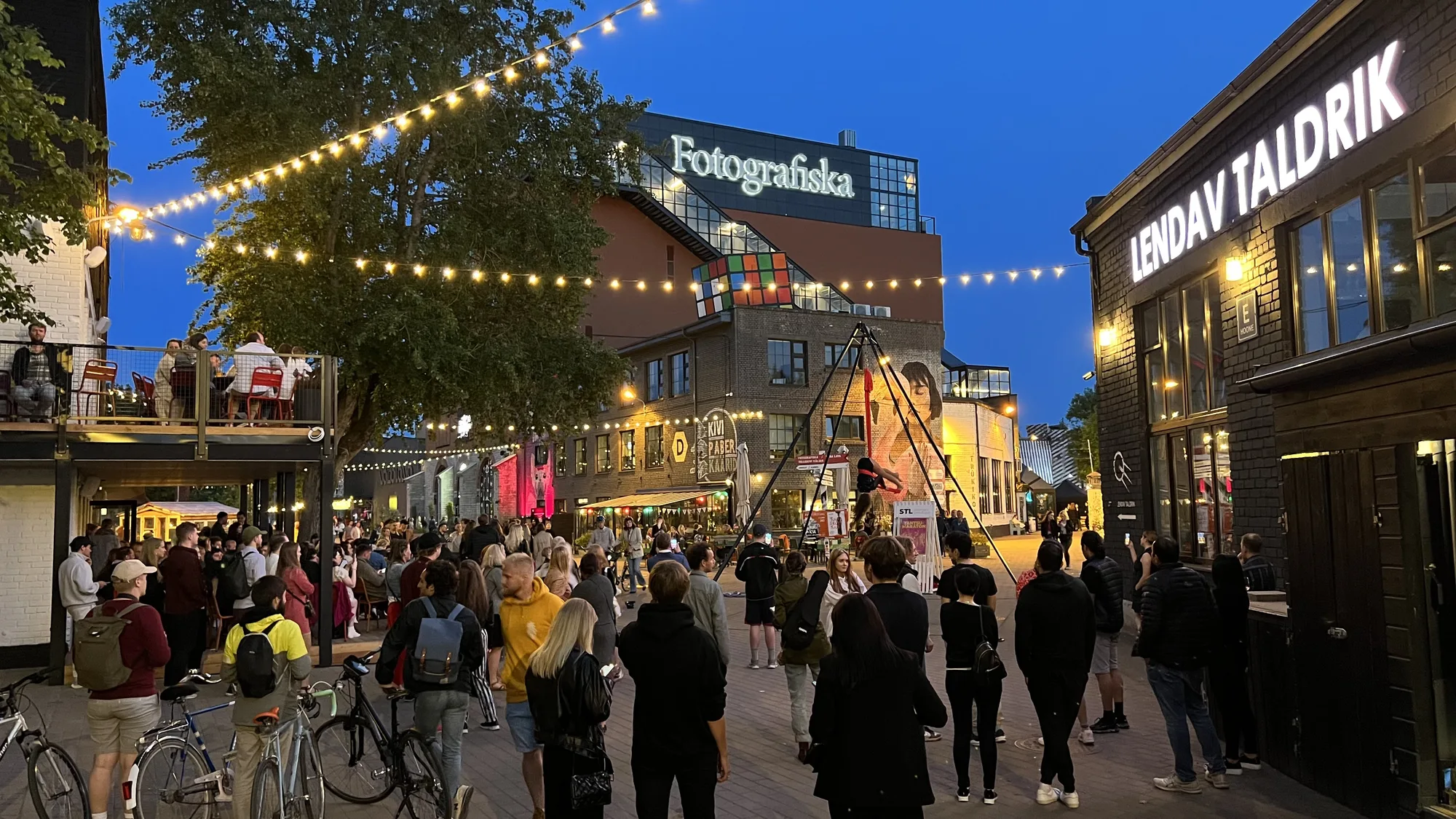
- Photography culture: Fotografiska
Official Info
For current details:
A Neighbourhood Tells Its Own Story
The Kalamaja Museum is a small branch of the Tallinn City Museum devoted entirely to the Kalamaja district itself — its people, its everyday life and its remarkable transformation. The name Kalamaja means ‘fish house’, a nod to its origins as a fishing and working-class suburb just outside the medieval walls, and the museum traces how that humble area became one of the most characterful, creative neighbourhoods in the city.
Opened in 2021, it feels modern, warm and approachable rather than dusty and formal. It leans into personal stories and community voices — the residents, the wooden houses, the factories, the waves of change — which makes it less a collection of objects than a portrait of a place and the people who have lived there.
That focus is exactly why it is such a good companion to simply walking the district. After visiting, the colourful timber houses and quiet streets outside read completely differently — you understand the lives and history behind the charm.
What the Visit Is Like
This is a small, intimate museum — best as a context stop, not a half-day:
- Personal stories and community voices from Kalamaja’s past and present.
- Displays on the district’s shift from fishing suburb to creative neighbourhood.
- A modern, approachable presentation that suits all ages.
- A perfect prelude to wandering the wooden streets of Kalamaja itself.
Use it as a small anchor between blocks of exploring rather than a destination in its own right.

Who It Suits
The Kalamaja Museum suits travellers who like to understand a neighbourhood rather than just photograph it — people drawn to local, everyday history, community stories and the human side of a city. It is a lovely hidden-gem stop for anyone already spending time in Kalamaja and Telliskivi, and its small size and modern style make it easy and unintimidating.
It fits naturally into a day in the area: combine a market lunch at Balti Jaam Market, this museum, street art in Telliskivi, a culture stop at Fotografiska, and dinner with a bar night. As an indoor stop, it is also a useful rainy-day option in the district.
Understanding Kalamaja’s Transformation
Kalamaja’s story is one of the most interesting urban turnarounds in the Baltics, and the museum tells it from the inside. For centuries this was a modest district of fishermen and, later, factory workers — its wooden houses built cheaply for ordinary families just beyond the city walls. Through the 20th century it slid into neglect, only to be rediscovered in recent decades by artists, creatives and young families who saw the charm in its timber streets and faded industry.
Today it is one of Tallinn’s most desirable and characterful neighbourhoods, home to Telliskivi Creative City, Balti Jaam Market and a thriving café-and-bar scene — all without losing its lived-in, residential soul. Visiting the museum first makes that whole arc visible as you walk the streets, which is exactly what makes it such a satisfying small stop.
Go here next
 Go here nextMikkel MuseumThe Mikkel Museum is a small, quietly impressive museum in Kadriorg Park built around a private collection — a lovely stop if you like intimate galleriesGo here nextAdamson-Eric MuseumThe Adamson-Eric Museum is a compact Old Town art museum dedicated to one of Estonia’s best-known modernist artists — a quiet, thoughtful stopGo here nextPeter I House Museum (Peter the Great)Peter I House Museum is a small wooden house museum in Kadriorg connected to Peter the Great and Catherine I — an offbeat history stop that pairs perfectly
Map
Tap markers to open linked guides.
Scroll to load the map
Map data © OpenStreetMap contributors, served by OpenFreeMap.
Nearby
FAQ
What is the Kalamaja Museum?
It is a small branch of the Tallinn City Museum devoted to the Kalamaja district — its people, everyday life and transformation from a fishing and working-class suburb into one of Tallinn’s most creative neighbourhoods. Opened in 2021, it focuses on personal stories and community voices.
Is the Kalamaja Museum worth visiting?
If you enjoy local, human-scaled history and are already exploring the area, yes. It is small and approachable, and it adds real meaning to a walk through Kalamaja’s wooden streets afterwards. It is a nice hidden-gem stop rather than a major destination.
What does Kalamaja mean?
Kalamaja means ‘fish house’ in Estonian, reflecting the district’s origins as a fishing and working-class suburb just outside the medieval walls. The museum traces how that humble area became a characterful creative neighbourhood.
Where is the Kalamaja Museum?
In the Kalamaja district, near Balti Jaam Market and Telliskivi Creative City, which makes it easy to fold into a day of market food, street art and neighbourhood wandering.