
Quick facts
- Getting there
- Short walk or tram from the centre; beside the Balti Jaam Market
- Best for
- Street art, design, and a relaxed afternoon-into-evening
- Good to know
- Works year-round; start mid-afternoon and let energy build into evening



Telliskivi’s Vibe
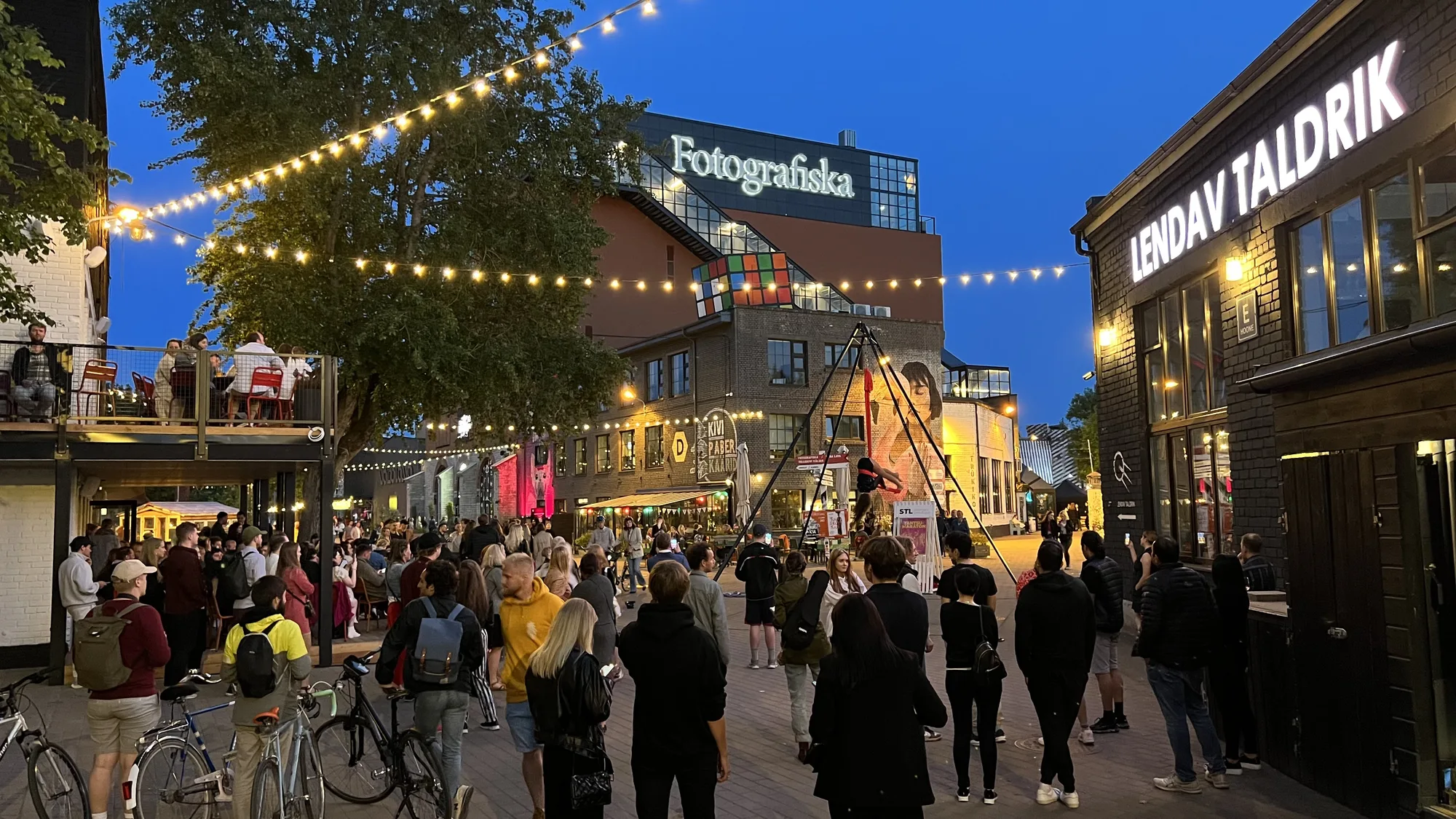
Think of Telliskivi as a creative playground built into a former industrial complex: murals, studios, cafes, galleries, and pop-in places that make an afternoon feel full without feeling scheduled.
It’s also big for a “creative district”: the area is made up of multiple buildings and hundreds of small companies and studios, so it rewards wandering and curiosity.
What to Do (A Simple Checklist That Still Feels Unplanned)
- Wander and look for street art (then wander some more).
- Pop into small shops and design corners.
- Add one cultural anchor: Fotografiska.
- Finish with a relaxed dinner or bar.
If you want a full creative-day structure, start at Balti Jaam Market and walk over.
The trick is to treat the checklist loosely. The alleys between the repurposed buildings act as natural gallery corridors, so the best discoveries — a new mural, an open studio door, a tiny design shop — come from following your curiosity rather than a route. Give yourself an unhurried couple of hours and let one good café or a gallery like Fotografiska be the single fixed point of the visit.
How to Do Telliskivi
- Start mid-afternoon and let the energy build into evening.
- Combine it with a neighborhood walk in Kalamaja.
- End the night with drinks — see Best Bars in Tallinn.
Pair It With
- Balti Jaam Market for lunch.
- Sunset at Noblessner for a modern waterfront finish.
When It’s Best
Telliskivi works year-round:
- Summer: terraces and long evenings.
- Autumn/winter: cozy interiors, galleries, and a great “urban warm-up” day.
If you’re planning around seasons, see Tallinn in Winter and Tallinn in Summer.
From Railway Yard to Creative City
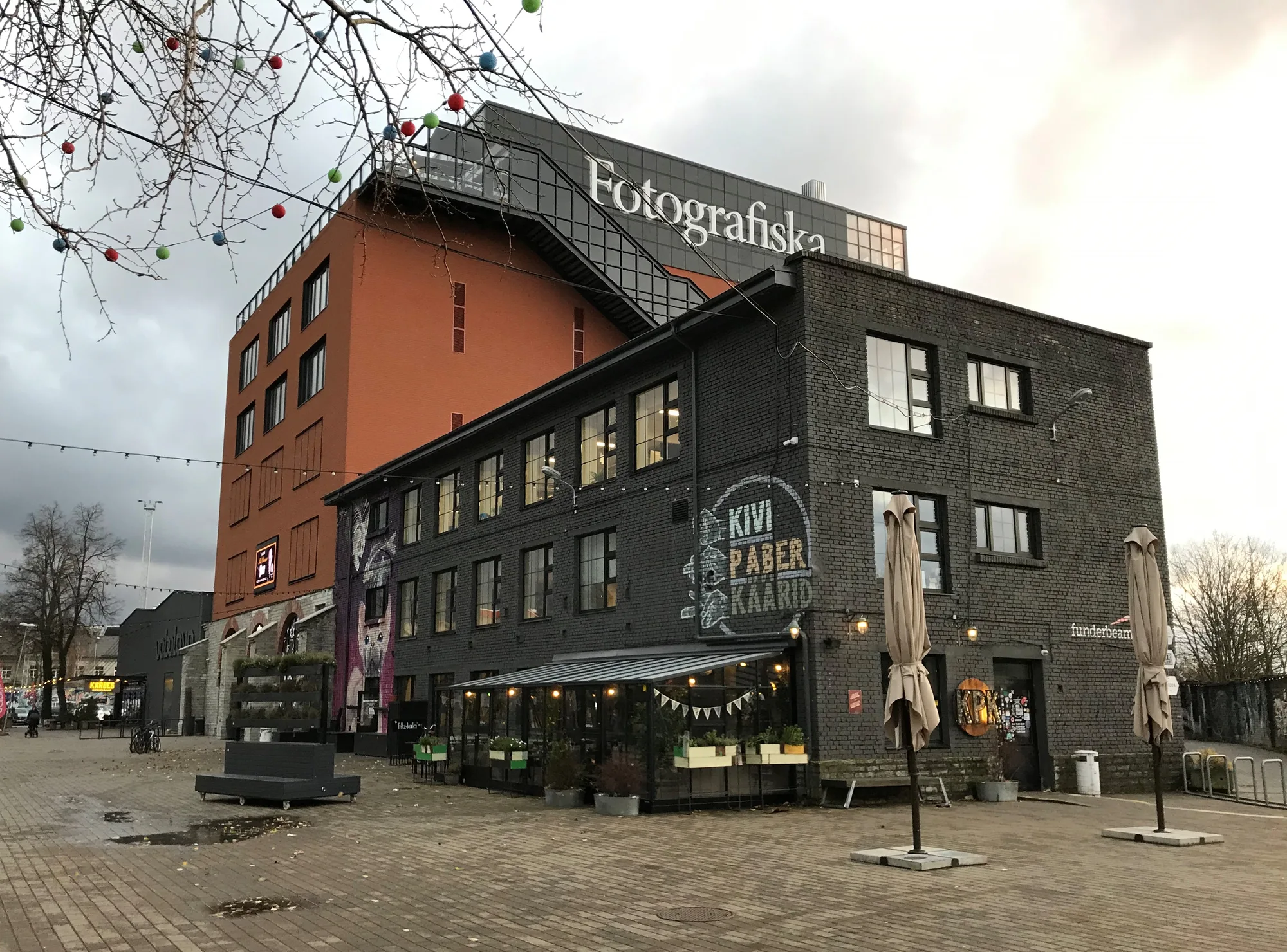
Telliskivi Creative City (Telliskivi Loomelinnak) occupies a former railway-repair and industrial complex beside the Baltic Railway Station. When the industrial use wound down, the cluster of old halls and warehouses was gradually reinvented rather than demolished — and that reuse is exactly what gives the area its character.
Today it is one of the largest creative hubs in the Baltics: a campus of repurposed industrial buildings now home to hundreds of small companies, studios, design shops, galleries, restaurants, bars and event spaces. The raw industrial bones — brick, steel, exposed structure — are deliberately kept, and the large-scale street art that covers many walls is refreshed regularly, so the place looks a little different each time you visit.
The mix of grit and creativity is the point. Telliskivi is where contemporary Tallinn shows itself most clearly, a complete contrast to the medieval Old Town a short walk away.
Practical Tips for Telliskivi
- It's close. Telliskivi is a short walk or a couple of tram stops from the city centre, right by the Balti Jaam Market and next to Kalamaja.
- Weekends add a flea market. On weekend mornings a flea market fills the central yard, drawing a genuinely local crowd — a good reason to come early in the day.
- Events shift the mood. The complex hosts concerts, markets and festivals, so it can be quiet on a weekday afternoon and buzzing on an event night; check what is on if timing matters.
- Give it time. With so many buildings and corners, it rewards unhurried wandering rather than a quick tick-off.
- Cards everywhere. As across Estonia, paying is contactless and cash-free.
Go here next
 Go here nextF-Hoone (Telliskivi)F-Hoone is a Telliskivi classic: a relaxed restaurant/bar/cafe anchor in Tallinn’s creative district, great for an easy meal before galleries, street artGo here nextBalti Jaam MarketBalti Jaam Market is a local favorite near Tallinn’s main station: food stalls, small shops, and everyday city energy.Go here nextRØST BakeryRØST Bakery is a beloved Tallinn stop for pastries and coffee — a great anchor for a Kalamaja/Telliskivi day.
Map
Tap markers to open linked guides.
Scroll to load the map
Map data © OpenStreetMap contributors, served by OpenFreeMap.
Nearby
FAQ
What is Telliskivi Creative City?
It is a former railway-repair and industrial complex beside the Baltic Railway Station, reinvented as one of the largest creative hubs in the Baltics — home to studios, design shops, galleries, restaurants and bars, with large-scale street art across the old industrial buildings.
Is Telliskivi worth visiting?
Yes, especially if you want to see contemporary Tallinn. It is the best place in the city for street art, independent design and a relaxed food-and-bar scene, and it pairs naturally with neighbouring Kalamaja and the Balti Jaam Market.
How do I get to Telliskivi?
It is a short walk or a couple of tram stops from the city centre, right next to the Balti Jaam Market and the Baltic Railway Station, and an easy stroll from the Old Town in around 15 minutes.
When is the best time to visit Telliskivi?
Weekend mornings are lively thanks to the flea market in the central yard, while afternoons into the evening are best for the food and bar scene. It works year-round — terraces in summer, cosy interiors and galleries in the colder months.