
Quick facts
- Time needed
- A design-focused half day
- Best for
- Telliskivi for small studios and boutiques; Rotermann for polished central shops


Where to Look
- Telliskivi: the best area for small studios, boutiques, and creative city energy.
- Rotermann: polished modern architecture with central convenience.
Start with Telliskivi and then drift toward the center.
A Design-Focused Half Day
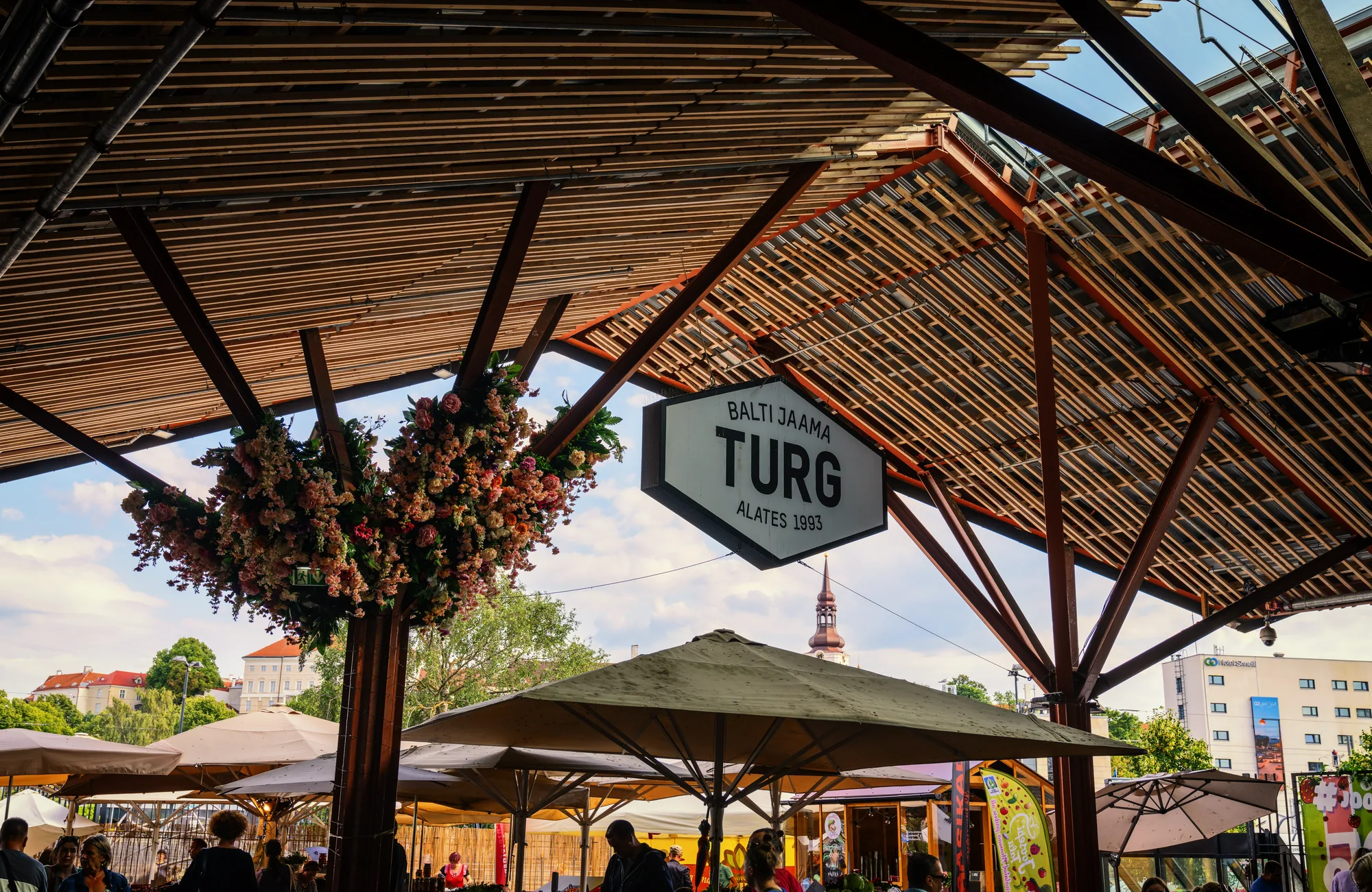
Balti Jaam Market lunch → Telliskivi shops + street art → sunset in Noblessner.
Links:
Pair Design with Museums
If you want to stack a culture day, pair design shopping with Kumu or another pick from Museums in Tallinn.
Why Estonian Design Is Worth Your Time
Estonia punches above its size in design. It’s a small, digitally-minded country with a strong craft heritage and a confident contemporary scene, and that mix shows up in its shops: clean Nordic lines, natural materials, and a quiet wit.
Expect to find ceramics and glass, textiles and knitwear, jewellery, stationery and prints, lighting, and homeware from independent studios — much of it made locally and in small runs. It’s the kind of shopping where you come home with one well-chosen object rather than a bag of trinkets.
Where to Look (and What to Expect)
The design scene clusters in a few walkable places:
- Telliskivi — the creative heart of the city: concept stores, maker studios, and design boutiques set among street art and cafes. The single best area for an afternoon of browsing.
- Kalamaja — smaller studios and workshops tucked into the wooden-house streets next door.
- Rotermann Quarter — polished, central design and homeware shops in dramatic modern architecture.
- Old Town — a handful of higher-end Estonian design and craft shops among the souvenir stores; look carefully for the genuinely local ones.
For the broader retail picture, see Shopping in Tallinn.
Tips for a Design Day
- Build it around Telliskivi. Most of your stops will be here, so anchor the afternoon there and drift toward the centre or seafront after.
- Check opening days. Independent studios keep their own hours and some close early in the week.
- Buy small and packable. Ceramics, textiles, prints, and jewellery travel best.
- Pair it well. Lunch at Balti Jaam Market, then shops, then a sunset in Noblessner makes a near-perfect half-day.
On a wet day, a design-and-museum afternoon also works as a Rainy Day in Tallinn plan.
A Small Country With Big Design Confidence
Estonia has an outsized reputation in design for a country of its size, and spending an afternoon in its shops shows why. It is a place that combines a deep craft heritage — wool, linen, woodwork, ceramics — with a famously digital, forward-looking modern culture, and that mix gives Estonian design its particular flavour: clean Nordic lines, honest natural materials, restrained colour, and a quiet, dry wit. The result is objects that feel considered rather than flashy, the kind of thing you keep and use rather than display once and forget.
What you will actually find ranges widely: ceramics and glass, textiles and knitwear, jewellery, stationery and prints, lighting, and homeware, much of it made locally and in small runs by independent studios. Because so much is produced in limited quantities, browsing here feels more like visiting workshops than trawling a chain store, and the people behind the counter are often the makers themselves. That is part of the appeal, and it is why a design day in Tallinn tends to send you home with a single well-chosen piece and a story to go with it. The broader Shopping in Tallinn guide puts design in context alongside crafts and souvenirs.

Planning the Perfect Design Afternoon
A design afternoon in Tallinn almost plans itself once you anchor it in Telliskivi, the creative heart of the city, where concept stores, maker studios, and design boutiques sit among street art and cafes. Start with lunch at Balti Jaam Market right next door, then spend a couple of unhurried hours browsing the studios, drifting into neighbouring Kalamaja for smaller workshops as you go. From there you can finish on the water with a sunset in Noblessner, which turns a shopping trip into a genuinely lovely afternoon.
Keep a few practicalities in mind so the day runs smoothly. Independent studios set their own opening days and some close early in the week, so it is worth checking before you build a route around a specific shop. Buy with travel in mind — ceramics, textiles, prints, and jewellery all pack well, with ceramics simply needing careful wrapping — and remember that non-EU visitors may qualify for a VAT refund on larger purchases. If the weather turns, a design-and-museum combination, pairing the studios with Kumu or another pick from Museums in Tallinn, makes an ideal Rainy Day in Tallinn.
Why a Design Day Is Worth Building In
Setting aside an afternoon for design is one of the more rewarding things you can do in Tallinn, and it suits the city perfectly. Because so much of the good stuff is made locally in small studios, browsing here feels less like trawling a chain and more like visiting workshops, often with the makers themselves behind the counter. You come away not just with a well-chosen object but with a sense of how Estonia thinks about craft and modern life, that distinctive blend of deep material tradition and confident, forward-looking design. It is the kind of shopping that leaves you with a story as well as a purchase.
The day almost arranges itself once you accept that the creative quarter is the centre of gravity. Anchor the afternoon there, give yourself a couple of unhurried hours to drift between concept stores, studios, and boutiques, and let lunch at the nearby market and a sunset on the water bookend the browsing. Buy with travel in mind, favouring textiles, prints, ceramics, and jewellery that pack well, and keep an eye on opening days, since independent studios set their own schedules and some close early in the week.
And when the weather turns, as it often does in the Baltic, a design day flexes neatly into an indoor plan. Pairing the studios with a museum makes for a satisfying wet-weather afternoon that keeps you warm and dry while still getting under the skin of the city's culture. However you shape it, a design day shows you a side of Tallinn that the headline sights never quite reach.
One Last Tip
If you are short on time, do not try to see everything; pick one neighbourhood, slow down, and let yourself actually go into a few studios rather than skimming windows. The best finds here come from talking to the people behind the counter, hearing how something was made, and choosing one piece you genuinely love. A single well-chosen object, bought unhurriedly, will mean far more than a bag of rushed purchases.
Go here next
 Go here nextShopping in TallinnA simple shopping guide to Tallinn: Old Town souvenirs, Telliskivi design and small makers, Rotermann modern shopping, and how to keep shopping from takingGo here nextSouvenirs from TallinnWhat to buy in Tallinn: smarter, smaller souvenirs that feel meaningful — plus where to look (Old Town, Telliskivi, markets) and what to avoid.Go here nextFotografiska TallinnFotografiska Tallinn is a modern photography museum in Telliskivi. Here’s how to visit, what to pair it with, and how to make it part of a creative-city
FAQ
Where can I buy Estonian design in Tallinn?
Telliskivi is the best area, with concept stores and maker studios; Kalamaja has smaller workshops nearby, and Rotermann offers polished central design shops. The Old Town has a few higher-end Estonian design and craft stores among the souvenir shops.
What kind of design products is Estonia known for?
Look for ceramics and glass, textiles and knitwear, jewellery, stationery and prints, lighting, and homeware — much of it made locally in small studios, with clean Nordic lines and natural materials.
Is Telliskivi worth visiting for shopping?
Yes — Telliskivi is the creative hub of the city and the single best place for an afternoon of design browsing, with shops, studios, street art, and cafes all in one walkable area.