
Quick facts
- Time needed
- 60–90 minutes, then back to walking
- Best for
- Old Town for souvenirs; Telliskivi/Kalamaja for design and small makers


Old Town for Classic Souvenirs
Old Town is the obvious place for souvenir browsing — just prioritize small, locally-made goods over generic imports.
Pair shopping with a walk: Tallinn Old Town.
Telliskivi for Design + Makers
If you like design, small studios, and modern Tallinn energy, shop in Telliskivi and nearby Kalamaja.
Keep It Light
A simple rule: shop for 60–90 minutes, then go back to walking and views. Shopping is better when it’s a break, not the whole day.
What’s Worth Buying in Tallinn
Tallinn rewards shoppers who skip generic fridge magnets and look for things actually rooted in Estonia:
- Knitwear and wool. Hand-knitted mittens, socks, and sweaters — often in traditional patterns — are a genuine local craft, and very practical in the Baltic climate.
- Linen. Estonia and its Baltic neighbours have a strong linen tradition; towels, table linen, and clothing are good, lasting buys.
- Estonian design. Homeware, ceramics, jewellery, and prints from local studios — modern, well-made, and easy to pack.
- Chocolate and marzipan. Kalev chocolate and hand-painted marzipan are classic edible gifts (see Best Desserts in Tallinn).
- Books and prints. Design and photography books, plus art prints, make light, characterful souvenirs (see Bookstores in Tallinn).
For a focused list of what to bring home, see Souvenirs from Tallinn; for design specifically, Design Shops in Tallinn.
Where to Shop, Area by Area
Each district has its own shopping personality:
- Old Town — souvenirs, crafts, knitwear, and amber; lovely to browse, but favour small, locally-made goods over mass-produced imports.
- Telliskivi & Kalamaja — independent design studios, makers, vintage, and concept stores; the best area for modern Estonian design.
- Rotermann Quarter — polished modern shopping in striking architecture, central and easy.
- City centre malls — for everyday needs, brands, and rainy-day browsing.
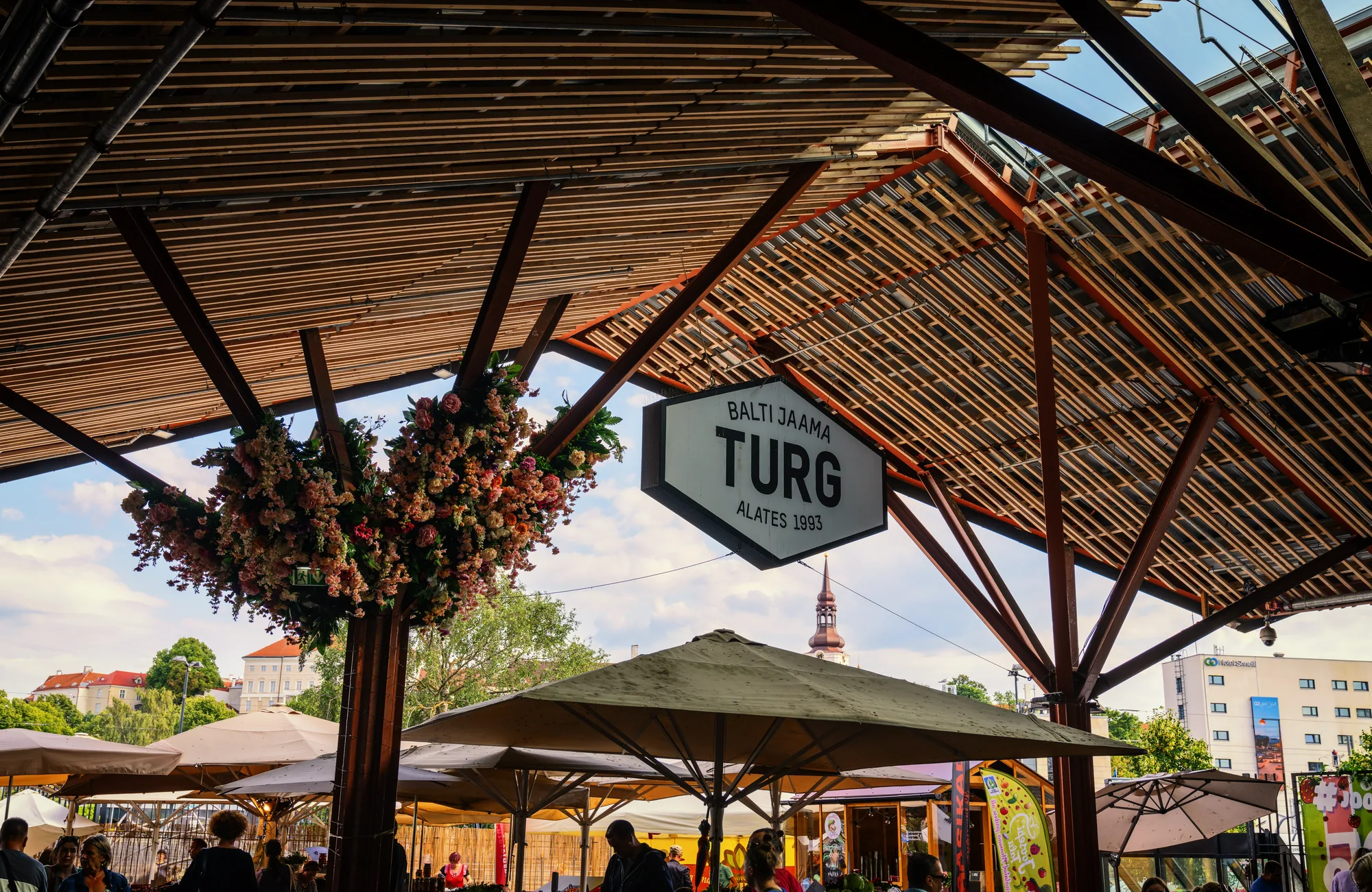
- Markets — Balti Jaam Market mixes food, vintage, and crafts in one stop.
Practical Shopping Tips
- Prioritise local and handmade. If the same item fills every tourist window, it’s probably not the memory you want.
- Watch opening hours. Small studios keep their own schedules and some close on Sundays or Mondays.
- VAT refunds. Visitors from outside the EU may be eligible for tax-free shopping at participating shops — ask in-store and keep receipts.
- Pace it. Shopping is best as a break between walks and viewpoints, not the whole day.
On a wet day, shopping pairs neatly with Rainy Day in Tallinn.
What Shopping in Tallinn Is Really Like
Shopping in Tallinn is less about big international brands and more about character, craft, and a strong sense of place. The city is small enough that its retail personality is shaped by its neighbourhoods rather than by sprawling malls, which means a good shopping day is really a walking day with stops. In the Old Town you browse for crafts, knitwear, and amber among medieval lanes; in the former industrial districts you find independent studios and makers; and in the modern quarters you get polished design and homeware in striking architecture. The pleasure is in the contrast, and in the fact that the best finds are usually small, local, and genuinely tied to Estonia.
Because of that, the most rewarding approach is to shop with intent rather than to sweep up generic souvenirs. Estonia has real material traditions — wool and linen, ceramics and glass, design and print — and a thriving contemporary creative scene, so it is easy to come home with one or two well-chosen things that mean something rather than a bag of identical trinkets. If the same item fills every tourist window, treat that as a signal to look a little harder. The companion guides to Design Shops in Tallinn and Souvenirs from Tallinn go deeper on the specifics.

A Relaxed Shopping Day, and the Practicalities
The smartest way to shop here is to keep it light and weave it into the day rather than letting it swallow the day whole. An hour to ninety minutes of browsing, broken up by coffee, a viewpoint, or a market, is far more enjoyable than a grinding marathon, and it leaves room for the walking and the views that are the real point of Tallinn. A natural route is a morning in the Old Town for crafts and knitwear, a market lunch, and an afternoon of design browsing in Telliskivi and Kalamaja, finishing with a sunset somewhere on the water.
A few practicalities make the day smoother. Small independent studios keep their own hours and some close on Sundays or Mondays, so check before you make a special trip. Visitors from outside the European Union may be able to claim a VAT refund on larger purchases at participating shops, so ask in-store and keep your receipts. And on a wet day, shopping pairs neatly with indoor stops and cafes, which is exactly the kind of plan the Rainy Day in Tallinn guide is built for. For where to base yourself, the Rotermann Quarter is the most convenient modern shopping hub.
Shop Like a Local, Not a Tourist
The difference between forgettable and genuinely good shopping in Tallinn comes down to where you point your attention. Steer away from the windows full of identical mass-produced souvenirs and toward the things the city actually does well: locally made wool and linen, ceramics and glass, contemporary design, prints and books, and the chocolate and marzipan that carry real local heritage. A useful instinct is to ask whether an item is something you would still value at home, because the small, useful, place-specific things are the ones that keep the trip alive long after you are back.
It also helps to think of shopping as a thread woven through the day rather than the whole point of it. An hour or so of browsing, broken up by coffee, a market, or a viewpoint, is far more enjoyable than a long slog around the shops, and it leaves room for the walking and the views that are the real reason to be here. Let each neighbourhood play to its strength, from Old Town crafts to creative-district design to polished modern quarters, and you cover the best of the city's retail without ever feeling like you have spent the day in stores.
A couple of practical points round things off: small studios keep their own hours and may close early in the week, and visitors from outside the European Union can often reclaim VAT on larger purchases, so it is worth asking in-store and keeping receipts. Shop with a little intent and a light touch, and you will come home with things that genuinely say Tallinn.
Go here next
 Go here nextDesign Shops in TallinnTallinn for design lovers: where to look for contemporary Estonian design, how to plan a Telliskivi design afternoon, and what to pair it with for the perfectGo here nextSouvenirs from TallinnWhat to buy in Tallinn: smarter, smaller souvenirs that feel meaningful — plus where to look (Old Town, Telliskivi, markets) and what to avoid.Go here nextNightlife in TallinnTallinn nightlife is cozy, creative, and surprisingly varied: craft beer in converted industrial spaces, stylish cocktail bars, and easy nights that still feel
FAQ
What should I buy in Tallinn?
Look for genuinely local goods: woollen knitwear, linen, Estonian design and ceramics, Kalev chocolate, marzipan, and amber. These beat generic souvenirs and travel home well.
Where is the best shopping in Tallinn?
The Old Town is best for crafts and souvenirs, Telliskivi and Kalamaja for independent design and makers, and Rotermann for polished modern shopping. City-centre malls cover everyday needs.
Can tourists get a VAT refund in Tallinn?
Visitors from outside the EU may qualify for tax-free shopping at participating retailers. Ask in-store about the scheme and keep your receipts to claim the refund when leaving the EU.