
Quick facts
- Getting there
- Easy walk to Old Town on one side, harbor/waterfront on the other
- Best for
- A modern, central base for short trips
- Good to know
- Small and walkable; a strong food, design and shopping cluster



What Rotermann Feels Like
Rotermann blends old industrial textures with contemporary architecture. It’s polished and central — perfect if you want a modern Tallinn base that still feels close to everything.
It’s the “between zone”: Old Town on one side, harbor/waterfront on the other, and easy access to shopping and restaurants.
If the Old Town is medieval Tallinn and Telliskivi is creative Tallinn, Rotermann is the polished, contemporary version — sharp lines, design shops, good restaurants, and a confident modern look. It rarely tops a sightseeing list on its own, but its position and style make it one of the most useful and pleasant corners of the city to pass through or base yourself in.
A Little Context
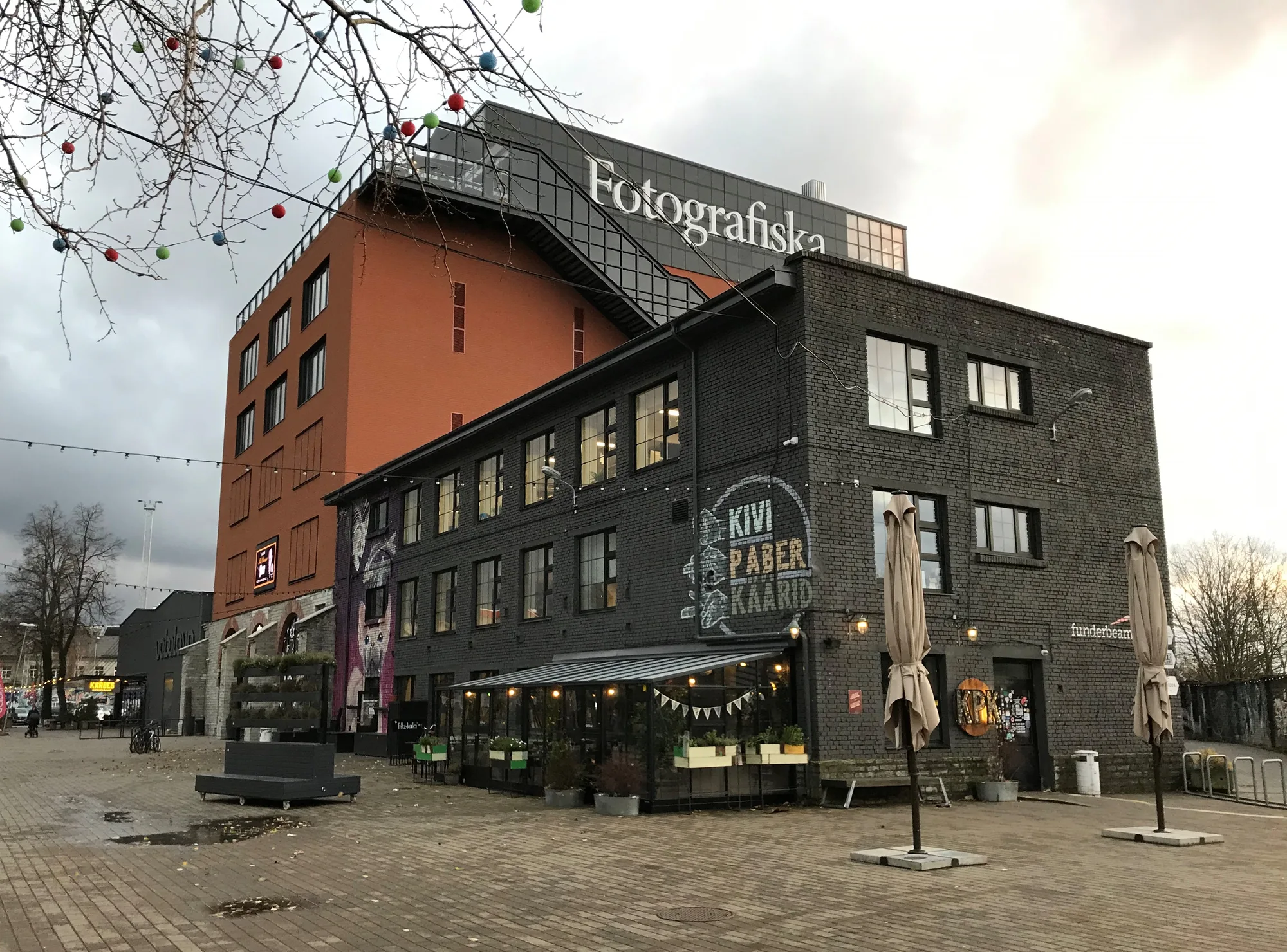
Historically, this area was shaped by the Rotermann industrial complex. Today it’s one of the clearest examples of Tallinn’s modern renovation style: old brick + new glass and steel.
What makes it architecturally interesting is the restraint: the developers kept the original brick warehouses and mills as the anchors, then added contemporary volumes that clearly read as new rather than imitating the old. Walking through, you constantly see the two eras in dialogue — a 19th-century facade with a crisp glass storey set above it. For a city that is famous for its medieval core, Rotermann is a reminder that Tallinn also does modern architecture well.
Why It’s a Great Base
- Easy walk to Old Town.
- Easy access to the waterfront.
- Great for short trips where convenience matters.
The appeal for a short trip is simple: you get a modern, comfortable, design-led area while still being able to walk into medieval lanes within minutes and reach the ferry terminals just as quickly. That combination of contemporary comfort and total centrality is exactly what makes it such a practical base.
How to Use Rotermann on a Trip
Rotermann is most useful as a connector:
- Morning: Old Town lanes and viewpoints
- Afternoon: Rotermann lunch + modern-city wandering
- Evening: harbor sunset or a Telliskivi night
Pair Rotermann With…
Use Rotermann as your “between” zone: Old Town mornings, Kadriorg afternoons, Telliskivi evenings.
From Factory Complex to Design Quarter
Rotermann Quarter takes its name from the Rotermann industrial complex that once stood here — a 19th-century cluster of factories, mills and warehouses between the Old Town and the harbour. For decades it was a working industrial district; later it fell quiet and semi-derelict.
Its redevelopment is one of the clearest examples of how Tallinn handles its industrial heritage. Rather than flattening the old buildings, architects kept the original brick warehouses and grafted bold contemporary additions onto them — new glass, steel and concrete sitting directly on top of and beside the historic shells. The result is a tight, walkable quarter of striking old-meets-new architecture, with shops, offices, restaurants and apartments.
It is worth slowing down just to look up: the juxtaposition of weathered brick and sharp modern forms is the whole appeal, and it makes Rotermann a favourite for anyone who likes architecture and design.
Practical Tips for Rotermann
- Location is everything here. Rotermann sits right between the Old Town and the harbour, so it is one of the most convenient bases in the city — a few minutes' walk to Town Hall Square in one direction and the ferry terminals in the other.
- It's compact. The quarter itself is small and best simply walked through; allow time to wander and eat rather than treating it as a single sight.
- Good for food and shopping. It has a strong concentration of restaurants, cafés and design shops, making it an easy lunch or dinner stop between other plans.
- A great base for short trips. If you want a modern, stylish place to stay that keeps everything walkable, Rotermann is hard to beat — see Best Areas to Stay in Tallinn.
More Info
- Rotermann Quarter (official): https://www.rotermann.eu/en/
Go here next
 Go here nextTelliskiviTelliskivi Creative City is Tallinn’s modern creative heart: street art, studios, shops, events, and a relaxed food scene — ideal for an afternoon and evening.Go here nextNõmmeNõmme is Tallinn’s pine-forest neighborhood: local market mornings, quiet wooden-house streets, and a ‘small town inside the city’ feeling that’s perfectGo here nextBalti Jaam MarketBalti Jaam Market is a local favorite near Tallinn’s main station: food stalls, small shops, and everyday city energy.
Map
Tap markers to open linked guides.
Scroll to load the map
Map data © OpenStreetMap contributors, served by OpenFreeMap.
Nearby
FAQ
What is the Rotermann Quarter?
It is a former 19th-century industrial complex between the Old Town and the harbour, redeveloped into a modern design quarter where contemporary glass-and-steel additions sit on and beside the original brick warehouses. Today it is full of restaurants, cafes, shops and apartments.
Is Rotermann Quarter worth visiting?
Yes, especially if you like architecture and design or want a convenient base. It is small, so it works best as a walk-through lunch or dinner stop between the Old Town and the waterfront, with striking old-meets-new buildings to admire.
Is Rotermann a good place to stay in Tallinn?
It is one of the best modern, central bases. You can walk to Town Hall Square in a few minutes and reach the harbour just as easily, with plenty of restaurants and shops on your doorstep — ideal for a short, convenience-focused trip.