
Quick facts
- Cost
- Free
- Getting there
- Near the harbor – treat it as an outdoor viewpoint, not an adventure site
- Best for
- Architecture and photography; go in good light, late afternoon is ideal
- Good to know
- Respect fences and closures; surfaces can be uneven, watch your footing




Why People Love It (Even If It’s Rough Around the Edges)
Linnahall is not “pretty” in a postcard way — it’s dramatic. Wide steps, sea wind, and a slightly surreal feeling that you’re walking on a relic of another era.
If you like architecture, photography, and offbeat city texture, it’s one of Tallinn’s most memorable modern sights.
How to Visit Responsibly
Treat it like an outdoor viewpoint, not an adventure site:
- Respect fences and closures (access rules can change).
- Watch your footing — surfaces can be uneven.
- Go in good light (late afternoon is ideal).
For more sea-facing Tallinn, pair with Noblessner.
Pair It With
- Rotermann Quarter for a modern food/drink break
- A waterfront museum day: Seaplane Harbour
A Soviet-Era Monument by the Sea
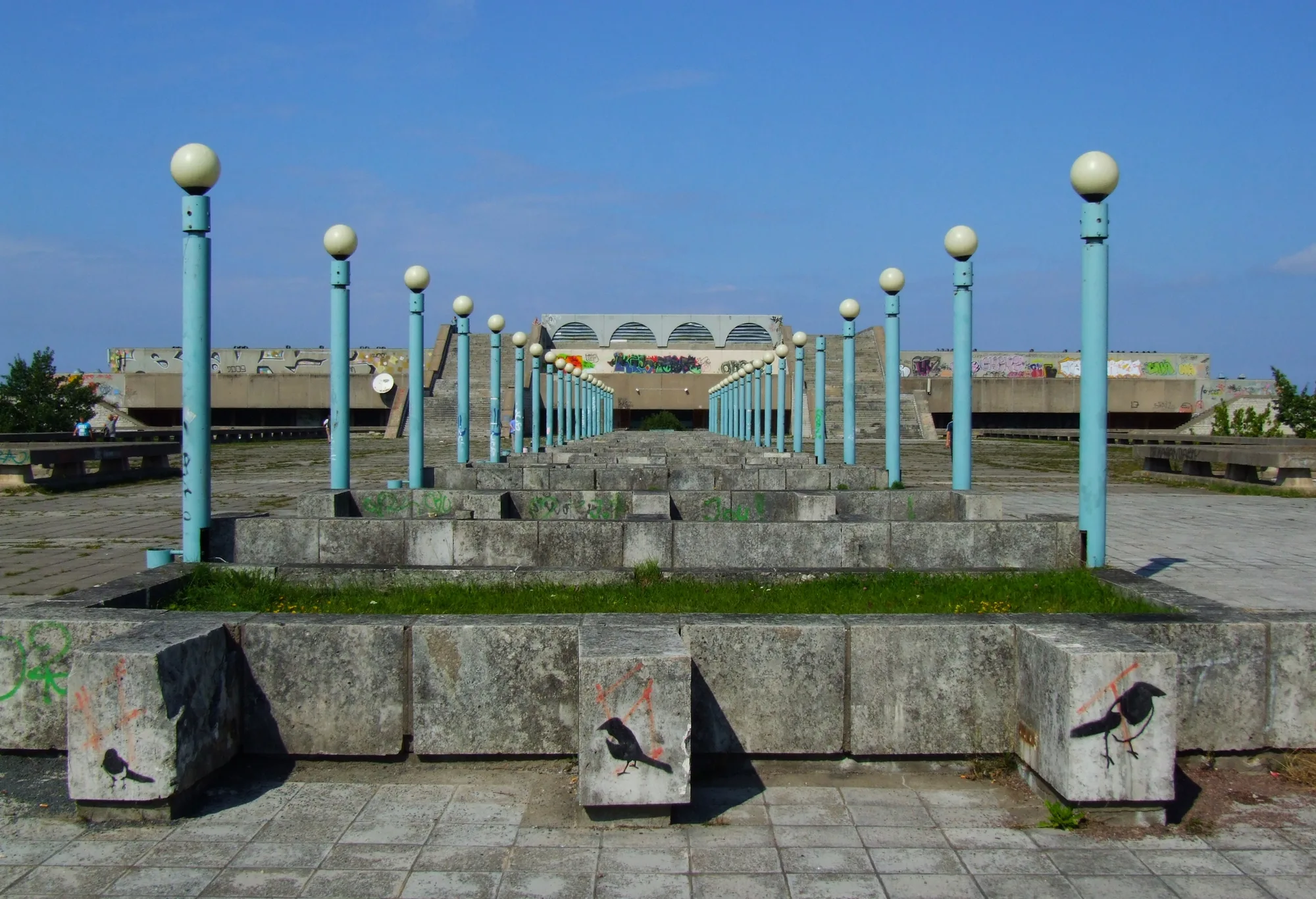
Linnahall is one of Tallinn’s most striking pieces of 20th-century architecture: a vast, stepped concrete structure on the waterfront built for the 1980 Moscow Olympics, when Tallinn hosted the sailing events. Originally a concert hall and ice rink, it was designed as a monumental, terraced form that lets you walk up and over it toward the sea.
Today the building is largely disused and weathered, and that’s part of its strange appeal. It has become a cult favourite for fans of brutalist and Soviet-modernist architecture, a melancholy concrete landscape that feels both monumental and abandoned — a tangible relic of a very different era in the city’s history.
What to Do There
Think of Linnahall as an outdoor place to walk, look, and photograph rather than a site with exhibits:
- Climb the steps to the upper terraces for open views over the harbour and the Gulf of Finland.
- Watch the ferries come and go between Tallinn and Helsinki.
- Photograph the geometry — the concrete forms are dramatic in raking late-afternoon light.
- Catch the sunset. The sea-facing steps are a favourite spot to sit out a summer evening.
It sits between the cruise/ferry harbour and the city, so it pairs easily with a waterfront walk toward Noblessner or back into the centre.
Getting There and Visiting Safely
Linnahall is just north of the city centre, a short walk from the Old Town and the ferry terminals; see Getting Around Tallinn if you’d rather use transport.
Because the building is old and partly closed, treat it as you would any disused structure: keep to accessible outdoor areas, respect any fences or closures (access rules can change), watch your footing on uneven concrete, and take care near edges. Late afternoon into sunset is the best time for both light and atmosphere; summer evenings are liveliest, while winter makes the concrete feel especially stark.

Why It Stays With You
Linnahall lingers in the memory in a way prettier sights often do not, precisely because it is so unlike everything around it. There is something genuinely cinematic about climbing the broad concrete steps with the sea wind in your face, reaching the upper terraces, and looking out over the harbour as ferries slide toward Helsinki. The scale is vast, the surfaces are weathered and graffitied, and grass pushes up through the cracks, all of which gives the place a melancholy, faintly post-apocalyptic beauty that photographers and architecture fans seek out.
It is also a window onto a particular chapter of the city's history, a monumental piece of late-Soviet ambition now left to the elements. Standing on it, you feel the gap between the era that built it and the confident, independent Tallinn of today. Pair the visit with the modern waterfront around Noblessner or the polished Rotermann Quarter and the contrast tells its own story about how much the city has changed.
Go here next
 Go here nextFreedom Square (Vabaduse väljak) + Victory ColumnFreedom Square is Tallinn’s modern civic heart at the edge of the Old Town — a spacious, open landmark anchored by the Victory Column and perfect for startingGo here nextPirita Convent Ruins (St. Bridget’s Convent)The Pirita Convent ruins are a powerful medieval landmark by the river in Pirita — an atmospheric stop that pairs beautifully with Pirita Beach, the TV TowerGo here nextDanish King’s Garden (Taani Kuninga Aed)Danish King’s Garden is a small, scenic park space on Toompea’s slope — perfect for a calm pause between cathedral sights, viewpoints, and your Old Town
Map
Tap markers to open linked guides.
Scroll to load the map
Map data © OpenStreetMap contributors, served by OpenFreeMap.
Nearby
Energy Discovery Centre
0.3 km away
Fat Margaret (Estonian Maritime Museum)
0.5 km away
LEE (Modern Estonian Restaurant)
0.6 km away
St. Olaf’s Church
0.7 km away
Museum of Estonian Architecture
0.7 km away
Tallinn Card Guide
0.7 km away
KGB Prison Cells (Pagari Street)
0.7 km away
Tallinn With Kids (A Calm Family Guide)
0.7 km away
FAQ
What is Linnahall?
Linnahall is a large stepped concrete building on Tallinn’s waterfront, built for the 1980 Moscow Olympics when the city hosted the sailing events. Once a concert hall and ice rink, it’s now largely disused and is a cult favourite for fans of Soviet-era and brutalist architecture.
Can you go inside Linnahall?
The interior is largely closed and the building is disused, so treat it as an outdoor viewpoint. You can usually walk up the exterior steps and terraces, but respect any fences or closures, as access can change.
Is Linnahall worth visiting?
If you like architecture, photography, or offbeat city texture, yes — the monumental concrete form and sea views are memorable, especially at sunset. If you only want classic, polished sights, it may not be for you.
When is the best time to visit Linnahall?
Late afternoon into sunset is ideal for light and atmosphere. Summer evenings are the liveliest; winter makes the concrete feel particularly dramatic and bleak. Watch your footing on the uneven surfaces in any season.