Quick facts
- Best for
- Old Town mornings (before 9 am); Toompea viewpoints (Kohtuotsa + Patkuli) at any hour; Kadriorg for art and parks; Linnahall for sea air and architecture
- Good to know
- Many of Tallinn's best sights are free; wear good shoes for the cobblestones; check the Tallinn Card if planning museum-heavy days


How to Think About Tallinn's Sights
Tallinn's sights divide naturally into three zones, and understanding that geography makes planning much simpler. The Old Town and Toompea hill (the medieval core) hold the classic landmarks — towers, churches, viewpoints, and cobblestone passages. Kadriorg, 2 km to the east, adds a Baroque palace, a park, and some of the best museum architecture in the Baltics. Then there is the scattered outer city: Linnahall and Patarei Prison on the waterfront, Pirita's convent ruins and TV Tower to the east, and the Zoo and Open Air Museum to the west. Most visitors can cover the Old Town thoroughly in a day, add Kadriorg as a second half-day, and fold in a few outer-city sights along the way.
Free vs. ticketed: A large proportion of Tallinn's best sights are free. The Toompea viewpoints (Kohtuotsa and Patkuli), Town Hall Square, the Old Town lanes, Linnahall, Freedom Square, Kadriorg Park, and most of the city's beaches and coastal walks cost nothing. The Tallinn Card can make ticketed museum and attraction entry more economical if you plan to visit several — but it is not essential if your itinerary skews toward wandering and viewpoints.
Old Town Essentials (Lower Town)
The Lower Town is Tallinn's UNESCO-listed medieval core — one of the most complete medieval town centers in Northern Europe. These are the anchor sights to build your walk around:
- Viru Gate: The most photographed entrance to the Old Town. Two medieval limestone towers frame the passage — arrive early in the morning to see it without crowds. The flower sellers who set up just inside the gate have been a fixture here for decades.
- Town Hall Square (Raekoja plats): The heart of the Old Town. The Gothic Town Hall dates from the 15th century. The square is animated year-round — Christmas market in December, outdoor cafe terraces in summer — and is the natural orienting point for any Old Town walk.
- St. Olaf's Church: A striking Gothic church in the northern part of the Old Town. Its tower (open for climbing in season — verify before visiting) offers excellent rooftop views across the Lower Town and out toward the bay. For most of the 16th century it was reputed to be the tallest building in the world.
- Tallinn City Wall: Sections of the medieval wall survive remarkably well. Walk the exterior along the stretch between the towers and you get a strong sense of the medieval city's scale and ambition.
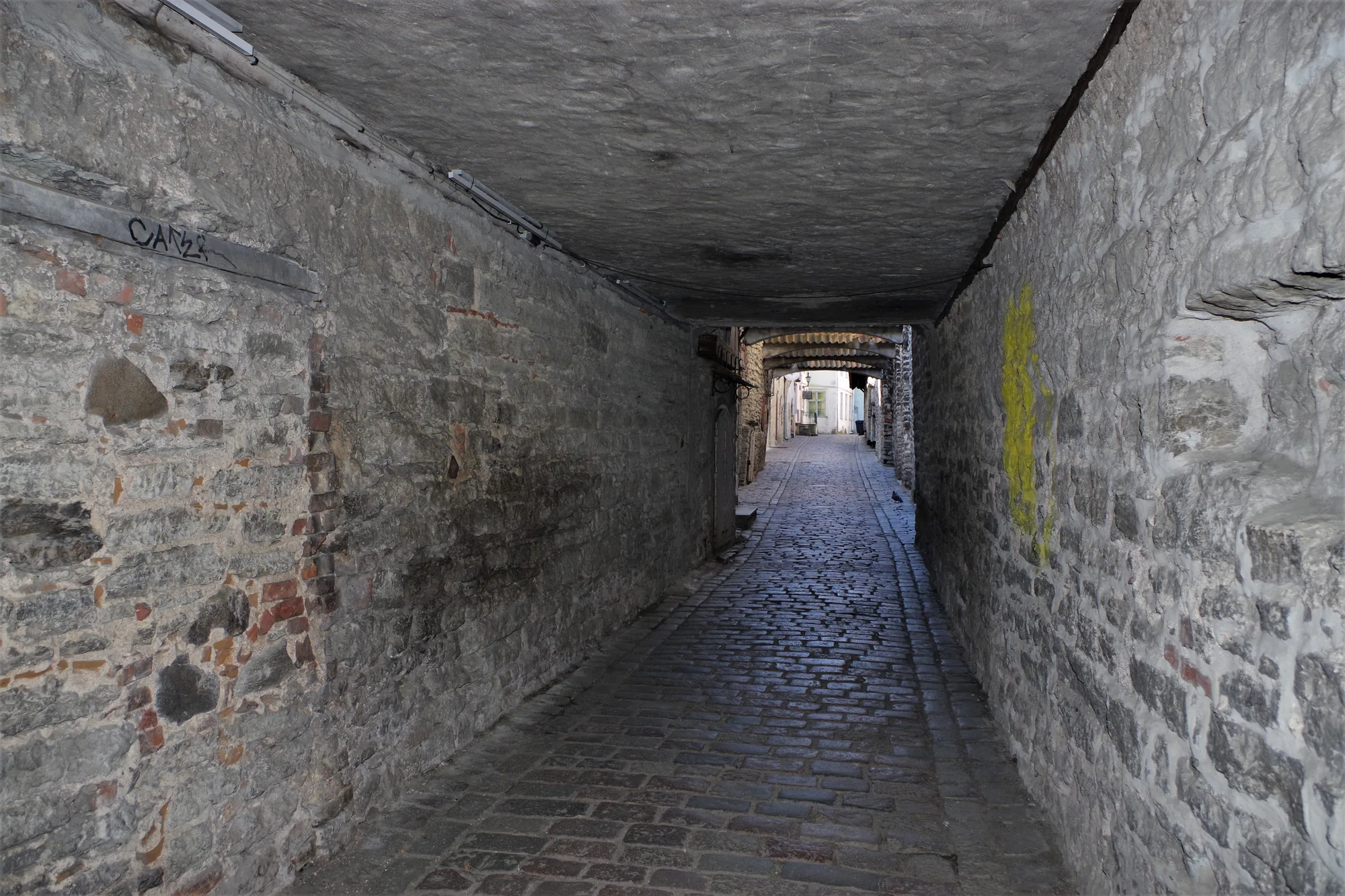
- St. Catherine's Passage (Katariina käik): A narrow medieval lane connecting Müürivahe Street to Vene Street, running alongside the ruins of a Dominican monastery. Lined with artisan workshops and one of the most atmospheric short walks in the city.
Allow a full morning for the Lower Town if you want to see it properly — combining sights, cafe stops, and unhurried wandering.

Toompea: The Upper City, Viewpoints, and Cathedral
Toompea is the fortified limestone hill that rises above the Lower Town. It has been the seat of power for most of Tallinn's history — first for Danish and German rulers, now for the Estonian Parliament. Walking up to Toompea (there are several routes; the most dramatic starts from the steep Pikk jalg or the more gradual Lühike jalg) rewards you with a completely different atmosphere from the commercial bustle of the Lower Town.
- Kohtuotsa Viewing Platform: The most dramatic city viewpoint. From here you look out over the red-tiled rooftops of the Old Town, the bay, and on clear days across to Helsinki. Free, open at all times, and genuinely impressive at any season. Go early in the morning or in the evening light.
- Patkuli Viewing Platform: A second viewpoint on the western side of Toompea, looking down over the city walls and across to the harbor. Different angle from Kohtuotsa — worth doing both.
- Danish King's Garden (Taani kuninga aed): A small, beautifully maintained garden tucked between the fortification walls and the base of Kiek in de Kök tower. Very peaceful and often overlooked by visitors who rush past to the viewpoints.
- Pikk Hermann Tower: The tall rectangular tower at the southwestern corner of the Toompea fortifications. The Estonian flag flies from its summit. Not open for interior visits, but it is one of Tallinn's most recognizable landmarks.
- Toompea Castle: The castle complex that now houses the Estonian Parliament (Riigikogu). The pink Baroque facade facing the square dates from the 18th-century Swedish period. The interior is not generally open to tourists, but the courtyard and exterior are part of any Toompea walk.
- Alexander Nevsky Cathedral: A Russian Orthodox cathedral built in the late 19th century when Tallinn was part of the Russian Empire. The onion domes and ornate interior make it one of the most visually distinctive buildings in the city center. Free to enter.
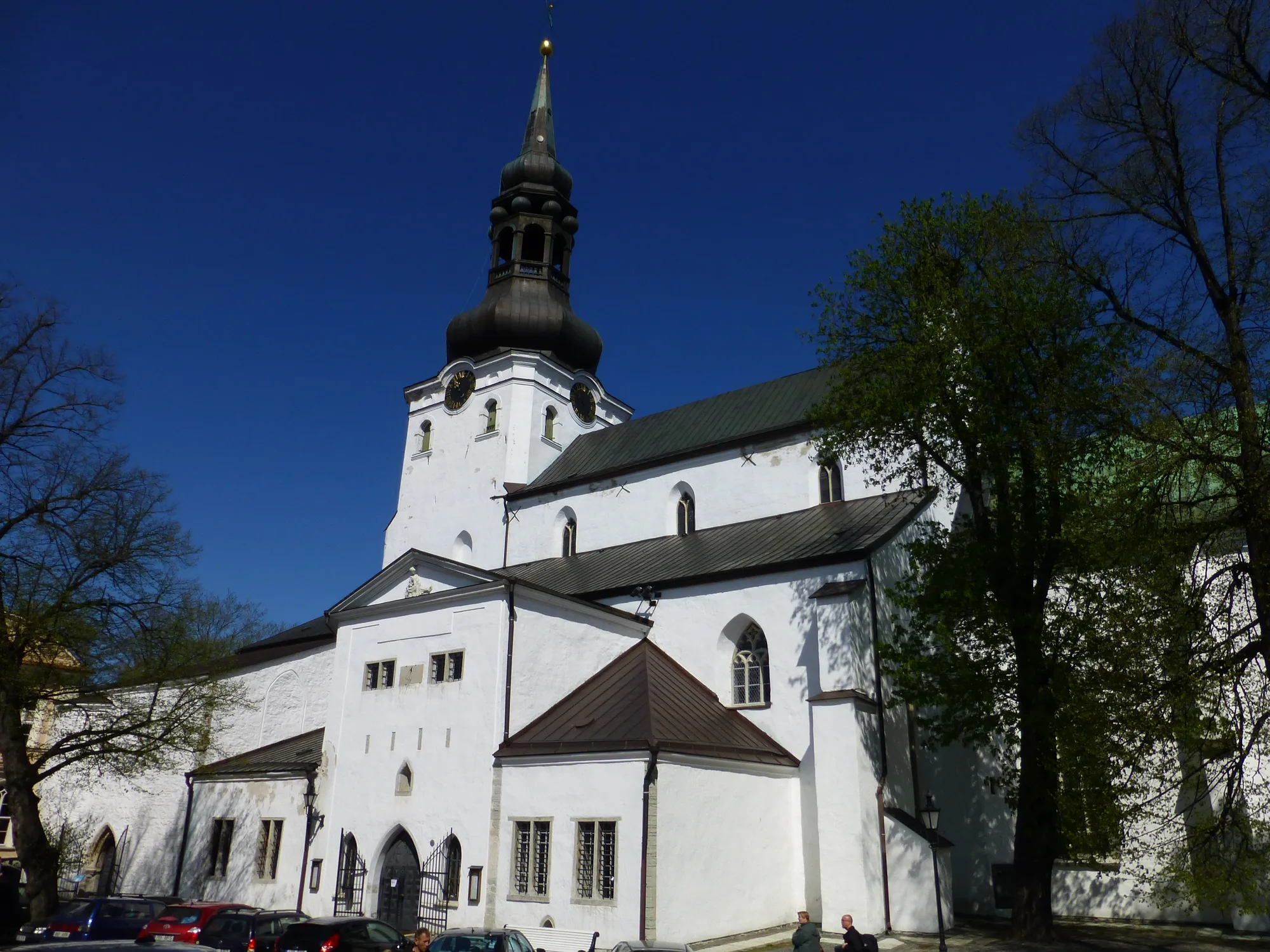
- St. Mary's Cathedral (Toomkirik): Tallinn's oldest church, with origins in the 13th century. The interior is austere Lutheran and houses historic coats of arms on the walls. A quiet, contemplative space.
Beyond the Old Town: Kadriorg, Waterfront, and Outer Sights
Some of Tallinn's most memorable sights are outside the medieval walls. Plan at least one half-day for the areas beyond the Old Town.
Kadriorg:
- Kadriorg Palace: The Baroque palace Peter the Great built for Catherine I, now home to the Kadriorg Art Museum. Even if you do not go inside, the exterior and surrounding formal gardens are beautiful to walk through. The palace is the centerpiece of the Kadriorg park.
- Kadriorg Japanese Garden: A small, immaculately maintained Japanese-style garden within Kadriorg park. A meditative pause that feels quite unlike the rest of Tallinn.
City center and waterfront:
- Freedom Square + Victory Column: Tallinn's modern civic heart at the edge of the Old Town. The Victory Column commemorates the Estonian War of Independence. A good place to orient yourself before entering or after leaving the Old Town.
- Linnahall: A vast, stepped concrete amphitheater and cultural complex built for the 1980 Moscow Olympics (the sailing events were held in Tallinn). Now ruined and atmospheric, it offers dramatic sea views and is one of the most interesting pieces of Soviet-era brutalist architecture in the Baltics. Treat it as an outdoor viewpoint and respect any access restrictions.
- Patarei Prison: A 19th-century seacoast fortress that served as a Soviet-era prison until 2002. The site is undergoing transformation (verify current access before visiting) but has been used for exhibitions and guided tours. A sobering and powerful historical space.
Outer Tallinn:
- Pirita Convent Ruins: The roofless Gothic ruins of a Bridgettine convent founded in 1407, on the bank of the Pirita river. The open sky through the stone arches makes it one of the most photogenic medieval ruins in Estonia. Pair with a walk to Pirita beach.
- Tallinn TV Tower: A telecommunications tower with an observation deck near Pirita. The views from the top are extensive — on clear days you can see Helsinki across the bay. Opening hours and access are worth a quick check.
- Song Festival Grounds: The outdoor amphitheater where Estonia's Song and Dance Celebrations are held. A significant cultural landmark — the singing revolution that helped restore Estonian independence in 1991 is deeply tied to this tradition. Beautiful on a quiet day for understanding the scale of the event.
Green Tallinn: Parks, Beaches, and Nature Inside the City
Tallinn has an unusually large amount of green space and coastline for a European capital of its size. A walk-heavy day oriented around parks and beaches can be just as satisfying as a museum day.
- Kadriorg Japanese Garden: The most meditative green space in the city.
- Tallinn Botanic Garden: A large botanic garden near Pirita with greenhouses, rock gardens, and Estonian and world flora collections. Especially good in spring and early summer.
- Tallinn Zoo: A well-regarded zoo on the western edge of the city, particularly popular with families. Home to rare breeds alongside more familiar animals. Allow a full half-day.
Beaches and coastal nature walks inside the city:
- Stroomi Beach: A park-backed city beach in the Pelguranna district, popular with locals. Sandy, with pine trees behind and calm water. Good for a low-key summer afternoon.
- Kakumäe Beach: Wide sand and gentle sunsets on the western coast. A quieter alternative to Pirita.
- Pikakari Beach: A wilder, more exposed shoreline north of the city. Beautiful light in the late afternoon.
- Paljassaare Conservation Area: A coastal peninsula with walking paths through wetlands and coastal meadows — excellent for birdwatching and a 'wild Tallinn' feel.
- Lake Harku: A freshwater lake west of the city center, good for swimming and walking in summer.
Start with the full overview: Beaches in Tallinn. For families: Tallinn With Kids.
The Best Viewpoints in Tallinn
Tallinn has excellent viewpoints, and the contrast between the high Toompea vantage and the sea-level harbor views is one of the city's distinctive pleasures.
Top five viewpoints:
- Kohtuotsa Viewing Platform — the classic rooftop panorama of the Old Town, looking east. Free, no time restrictions.
- Patkuli Viewing Platform — the harbor-facing counterpart to Kohtuotsa. Different angle, equally good. Free.
- St. Olaf's Church tower — height inside the Old Town rather than above it. Good for a different perspective (seasonal access — verify before going).
- Linnahall steps — sea-level brutalist grandeur looking out to the bay. Requires care but free.
- Tallinn TV Tower — the highest point, near Pirita. Best on a very clear day for the full Baltic panorama.
For the quintessential Tallinn photograph — red rooftops, towers, and sea — go to Kohtuotsa in the morning (the light is best from the east) or at golden hour before sunset.
Seasonal Notes for Sightseeing
Tallinn's sights are accessible year-round, but the experience changes significantly with the season.
Summer (June to August): Long days (the sun barely sets in late June) mean you can sightsee late into the evening. The Old Town is at its most atmospheric at 9 pm on a midsummer night, with golden light on the towers. The downside: it is also the busiest period. Beaches and parks are at their most rewarding.
Spring (April to May) and early autumn (September to October): Often the most photogenic time for sightseeing. Mild temperatures, fewer crowds, and soft light. The botanic garden and Kadriorg park are especially good in spring bloom.
Winter (November to March): Old Town under snow is genuinely beautiful, and far quieter than in summer. The Christmas market (December) transforms Town Hall Square. Most outdoor sights are freely accessible in winter — viewpoints, passages, and the sea walls — though outdoor cafes and some seasonal attractions may be closed. Check seasonal access for the TV Tower and St. Olaf's tower before visiting.
Practical Sightseeing Tips
- Start with a map walk. The Old Town is small enough to navigate by feel, but a quick 10-minute map review beforehand helps you connect viewpoints, passages, and churches without doubling back.
- Wear good shoes. The Old Town's cobblestones are beautiful and uneven. Comfortable, grippy footwear makes a real difference, especially in wet or icy conditions.
- Allocate your mornings. Early morning in the Old Town — before 9 am — is consistently the best time. Quiet, beautiful light, and empty lanes.
- Card payments work everywhere. Virtually all ticketed sights accept card. Cash is rarely needed.
- Tallinn Card: If you plan a museum-heavy trip, the card bundles entry to many attractions with public transport. See Tallinn Card for whether it makes sense for your itinerary.
- Getting around: The Old Town sights are all walkable from each other. For Kadriorg, take tram 1 or 3 (10 minutes from the center). For Pirita and Linnahall, bus or a longer walk along the coastal path. See Tallinn Without a Car for a full transit overview.
Sights FAQ
What is free to see in Tallinn? Quite a lot: the Toompea viewpoints (Kohtuotsa, Patkuli), Town Hall Square, the Old Town lanes, St. Catherine's Passage, Freedom Square, Kadriorg park, Linnahall, and all the beaches and coastal walks. The Alexander Nevsky Cathedral and St. Mary's Cathedral are free to enter (small donation appreciated). Most beach and nature areas cost nothing.
How long does the Old Town take? A thorough walk covering the Lower Town plus Toompea takes 3 to 4 hours at a relaxed pace. A quick highlights-only tour can be done in 90 minutes. Most visitors find that the Old Town rewards at least a full morning.
Can I climb the towers? St. Olaf's Church tower is open for climbing in the warmer months (roughly April to October) — a steep 258-step staircase up to an observation gallery around 60 metres high. The Tallinn TV Tower, well outside the centre, has a year-round observation deck at 170 metres. Most of the Old Town's other towers are exterior-only.
What is the best time of day to visit the Old Town? Before 9 am or after 5 pm. The lunch-to-late-afternoon window is when the Old Town is most crowded, especially in summer when cruise ships are in port.
Connecting Sights to a Bigger Itinerary
Tallinn's sights work best when they anchor a broader rhythm rather than being visited in isolation. A few patterns that consistently work well:
- The classic first-timer route: Arrive at Viru Gate in the morning, walk through the Lower Town to Town Hall Square, climb to Toompea for viewpoints, then descend via the other gate and spend the afternoon in Kadriorg (Kumu + park walk). This covers the essential Old Town, the upper city, and Estonia's best art museum in one day.
- The sea and history route: Freedom Square and Vabamu in the morning for a grounding in 20th-century Estonian history, then walk to Rotermann and out to Linnahall for the sea air and brutalist architecture, and finish with the Seaplane Harbour for a dramatic museum visit.
- The slow culture day: Kadriorg park in the morning (Japanese Garden, rose alley, Kumu), lunch in the neighborhood, then back by tram to spend the evening in the Old Town for the Toompea viewpoints at golden hour.
For guided walk options through the sights: Tallinn Old Town Walking Tour and Walking Routes in Tallinn. For itinerary planning: First Time in Tallinn and Weekend in Tallinn.
Map
Tap markers to open linked guides.
Scroll to load the map
Map data © OpenStreetMap contributors, served by OpenFreeMap.
In this section
Place
Viru Gate
Viru Gate is one of Tallinn’s most iconic entrances into the Old Town — a perfect starting point for medieval wandering, photos, and a Town Hall Square loop.
Place
Town Hall Square (Raekoja plats)
Town Hall Square is Tallinn’s historic heart: cafes, seasonal markets, and the perfect anchor for an Old Town day. Here’s how to enjoy it in every season.
Place
Alexander Nevsky Cathedral
Alexander Nevsky Cathedral is one of Tallinn’s most striking landmarks on Toompea hill — a powerful architectural contrast against the medieval Old Town.
Place
St. Olaf’s Church
St. Olaf’s Church is one of Tallinn’s most iconic spires — and, when the observation platform is open, one of the most rewarding Old Town viewpoints for skyline
Place
Kohtuotsa Viewing Platform
Kohtuotsa is the classic Tallinn viewpoint: sweeping Old Town rooftops and the perfect golden hour stop on a Toompea walk.
Place
Patkuli Viewing Platform
Patkuli viewing platform offers a dramatic perspective over Tallinn’s city walls and lower city — a perfect stop when you want a different angle than Kohtuotsa.
Place
Freedom Square (Vabaduse väljak) + Victory Column
Freedom Square is Tallinn’s modern civic heart at the edge of the Old Town — a spacious, open landmark anchored by the Victory Column and perfect for starting
Place
Linnahall
Linnahall is Tallinn’s iconic seaside monument to late-20th-century architecture — a vast, stepped concrete structure near the harbor that feels like brutalism
Place
Pirita Convent Ruins (St. Bridget’s Convent)
The Pirita Convent ruins are a powerful medieval landmark by the river in Pirita — an atmospheric stop that pairs beautifully with Pirita Beach, the TV Tower
Place
Danish King’s Garden (Taani Kuninga Aed)
Danish King’s Garden is a small, scenic park space on Toompea’s slope — perfect for a calm pause between cathedral sights, viewpoints, and your Old Town
Place
Pikk Hermann Tower
Pikk Hermann is one of Tallinn’s most symbolic towers on Toompea — closely tied to Estonian statehood and best experienced as part of a Toompea walk
Place
Kadriorg Japanese Garden
Kadriorg’s Japanese Garden is one of Tallinn’s calmest, most beautiful outdoor corners — a quiet design-forward walk inside Kadriorg Park that feels especially
Place
Tallinn Zoo
Tallinn Zoo is a big, walk-heavy outing in a forested setting — one of the best choices in Tallinn for families, animal lovers, and travelers who want
Place
Tallinn Botanic Garden
Tallinn Botanic Garden is a peaceful, plant-forward escape in Pirita — ideal for a slow half-day with greenhouses, seasonal outdoor areas, and a calm contrast
Place
Stroomi Beach (Pelgurand)
Stroomi is Tallinn’s easy, family-friendly city beach: a wide stretch of sand with a big park behind it, perfect for picnics, sea-air walks, and a low-effort
Place
Kakumäe Beach
Kakumäe is one of Tallinn’s best modern sandy beaches: wide, open, and easy to love on a warm day — ideal for swimming, long shoreline walks, and sunset light.
Place
Pikakari Beach
Pikakari is a Tallinn beach with a wilder, nature-edge feel — a lovely spot for sea air, sunset, and pairing the shoreline with a walk in nearby Paljassaare.
Place
Lake Harku (Harku järv)
Lake Harku is a freshwater Tallinn swim-and-walk option: a relaxed summer spot with a different vibe than the Baltic Sea beaches — great when you want nature
Place
Paljassaare Conservation Area
Paljassaare is one of Tallinn’s best “wait, this is still the city?” escapes: coastal paths, birdlife, and a calm, wild feeling right on the edge of the Baltic
Place
Tallinn City Wall
The Tallinn City Wall is one of the Old Town’s defining features: medieval fortifications, towers, and viewpoints that make the city feel like a storybook.
Place
St. Catherine’s Passage
St. Catherine’s Passage is one of Tallinn’s most atmospheric Old Town lanes — a quick, quiet detour that feels like stepping into medieval Tallinn.
Place
Toompea Castle
Toompea Castle sits at the political and historical center of Tallinn’s upper city — today it’s where Estonia’s parliament (Riigikogu) works, and it’s one
Place
St. Mary’s Cathedral (Toomkirik)
St. Mary’s Cathedral on Toompea hill is one of Tallinn’s most historic churches. Here’s how to include it in a Toompea + viewpoint walk.
Place
Kadriorg Palace
Kadriorg Palace is one of Tallinn’s most elegant sights. Here’s how to experience it as part of a Kadriorg park day with museums and slow walks.
Place
Tallinn TV Tower
Tallinn TV Tower is a panoramic modern sight near Pirita. Here’s how to visit, what to pair it with, and how to make it part of a seaside day.
Place
Patarei Prison (Patarei Sea Fortress)
Patarei is one of Tallinn’s most powerful historic sites — intense, atmospheric, and best paired with a Noblessner waterfront afternoon and the Seaplane
Place
Estonian Song Festival Grounds (Lauluväljak)
Tallinn’s Song Festival Grounds are a major cultural site — a place that explains Estonia’s relationship to music and collective identity.