
Quick facts
- Cost
- Kadriorg Art Museum (inside the palace) adults €15; reduced €10; family €30
- Hours
- Thu–Tue 10:00–18:00 (Wed to 20:00); Oct–Apr closed Mon
- Getting there
- In Kadriorg Park; reach it on a park walk and pair with Kumu
- Best for
- Elegant Baroque contrast to the medieval Old Town
- Good to know
- Built as a summer residence for Peter the Great and Catherine I





Quick Facts
- Baroque palace in Kadriorg Park
- Built as a summer residence for Peter the Great and Catherine I (18th century)
- Today: closely tied to the Kadriorg Art Museum experience
Why It’s Worth Adding
Kadriorg is Tallinn’s elegant side — and the palace is a big part of that mood. It’s a great contrast to the medieval Old Town.
What to Do (Palace + Park, Not Just a Photo Stop)
Kadriorg Palace works best when you treat it as part of a wider Kadriorg experience:
- Walk the park paths
- Spend time at the palace / museum
- Add one extra Kadriorg stop (Kumu, Japanese Garden, or a long cafe pause)
A Perfect Kadriorg Day Plan
Park walk → palace stop → museum anchor.
Start with Kadriorg and consider pairing with Kumu Art Museum.
Pair It With
After Kadriorg, head to the sea for sunset in Noblessner or take a long walk in Pirita.
More Info
- Kadriorg Art Museum official site: https://kadriorumuuseum.ekm.ee/en/
- Background (Wikipedia): https://en.wikipedia.org/wiki/Kadriorg_Palace
Peter the Great’s Summer Palace
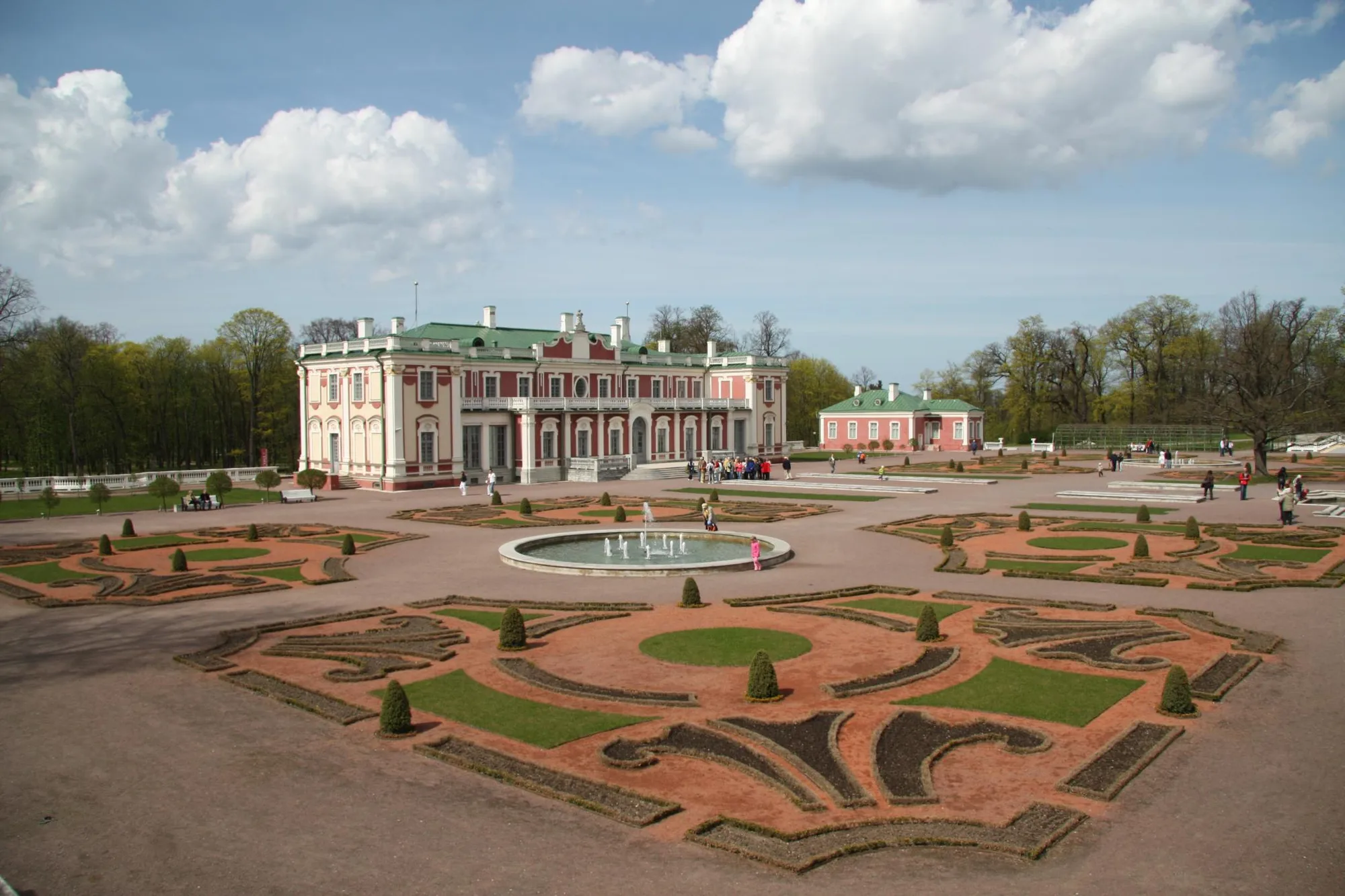
Kadriorg Palace is the grandest piece of Baroque architecture in Estonia, built in the early 1700s on the orders of the Russian tsar Peter the Great after his forces took Tallinn during the Great Northern War. He named the new estate Catherinethal — Catherine’s Valley — in honour of his wife, the Empress Catherine I; the Estonian name Kadriorg is a direct echo of that dedication.
The palace was designed by the Italian architect Nicola Michetti in a confident Roman Baroque style, and its showpiece is the lavishly decorated main hall, one of the finest Baroque interiors in northern Europe with its stucco work and ceiling paintings. The formal gardens, fountains and tree-lined avenues laid out around the palace set the elegant tone for the whole Kadriorg district that grew up around it.
Today the palace houses the Kadriorg Art Museum, the foreign art collection of the Art Museum of Estonia, so a visit combines the architecture and the art in one ticket. The nearby presidential residence and the wider park complete the sense that this is Tallinn’s most refined corner.

What to See Around the Palace
Kadriorg rewards a slow half-day rather than a quick photo. Beyond the palace itself, the grounds and immediate surroundings offer:
- The flower gardens and fountains directly behind the palace, at their best in late spring and summer.
- The Kadriorg Japanese Garden, a serene contemporary addition tucked into the park.
- The Mikkel Museum, a small private collection in the former palace kitchen building.
- The Kumu Art Museum, the country’s flagship modern art museum, a short walk through the park.
- Long, leafy walking paths that make the whole area feel like a green escape from the medieval Old Town.
Who It Suits and When to Go
Kadriorg Palace suits anyone who wants Tallinn beyond its medieval walls — couples on a romantic stroll, art and architecture lovers, and travellers craving green space and a slower pace. It is a natural choice on a sunny day when the gardens are in bloom, but the palace interior also makes it a strong rainy-day or shoulder-season option.
Getting here is easy: trams 1 and 3 link the city centre to Kadriorg in around fifteen minutes, or you can walk out along the waterfront. Pair the palace with a wider Kadriorg park day and finish, if you have the energy, with sunset by the sea in Pirita or Noblessner.
Go here next
Go here nextKadriorgKadriorg is Tallinn’s elegant green neighborhood: park strolls, museum time at Kumu, and a calmer pace that feels like a reset from the Old Town.Go here nextKadriorg Japanese GardenKadriorg’s Japanese Garden is one of Tallinn’s calmest, most beautiful outdoor corners — a quiet design-forward walk inside Kadriorg Park that feels especiallyGo here nextKumu Art MuseumKumu is Tallinn’s flagship art museum in Kadriorg. Here’s how to visit, what to expect, and how to pair it with a perfect park day in Kadriorg.Map
Tap markers to open linked guides.
Scroll to load the map
Map data © OpenStreetMap contributors, served by OpenFreeMap.
Nearby
FAQ
Who built Kadriorg Palace?
It was commissioned in the early 1700s by the Russian tsar Peter the Great after he took Tallinn, and named in honour of his wife, Empress Catherine I — the name Kadriorg means Catherine’s Valley. The Italian architect Nicola Michetti designed it in a Roman Baroque style.
Can you go inside Kadriorg Palace?
Yes. The palace houses the Kadriorg Art Museum, so your ticket lets you see both the Baroque interiors — including the spectacular main hall — and the foreign art collection of the Art Museum of Estonia. Check current hours and prices on the official site before you go.
How do you get to Kadriorg Palace from the Old Town?
Trams 1 and 3 connect the city centre to Kadriorg in about fifteen minutes, followed by a short walk through the park. You can also walk out along the waterfront in roughly 30 to 40 minutes.
What else is there to do in Kadriorg?
Plenty — the palace gardens and fountains, the Japanese Garden, the small Mikkel Museum, and the flagship Kumu Art Museum are all within the park, along with leafy walking paths. It easily fills a relaxed half-day.