
Quick facts
- Cost
- Grounds free to wander; Visitor Centre adults €8, students/pensioners €4 (by reservation)
- Hours
- Grounds open daily; Visitor Centre by advance booking (weekdays 10:00–16:00)
- Getting there
- By the sea; combine with Kadriorg parks/museums or a Pirita walk
- Best for
- Estonia's cultural story – worth visiting even on a quiet day with no concert




Why It Matters
Some places explain a country’s cultural story. Lauluväljak is one of those places — especially if you’re curious about Estonia’s identity and the role of collective singing in the country’s modern history.
What to See
Even on a quiet day with no concert on, the grounds are worth visiting for:
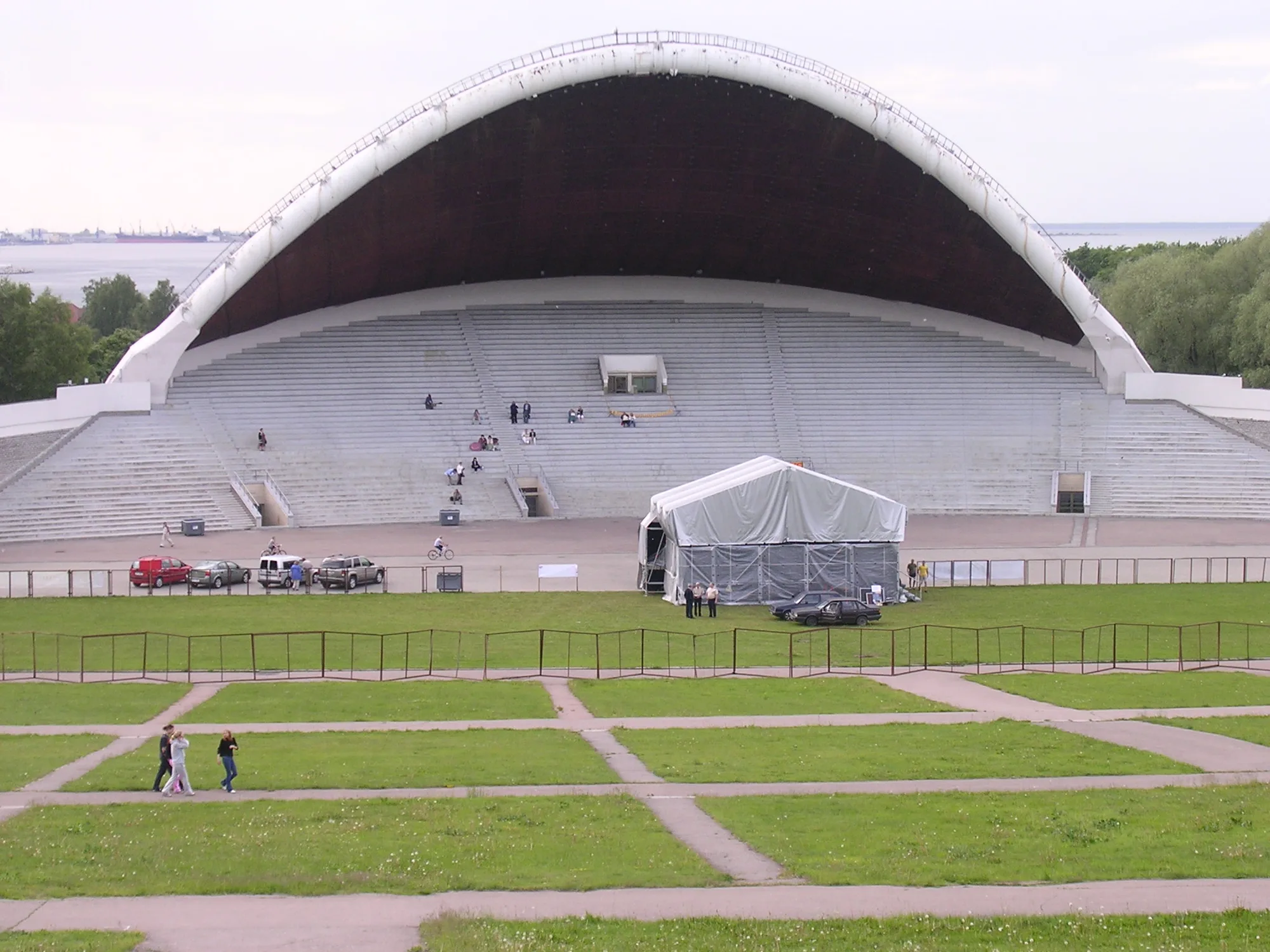
- The scale of the venue (it’s built for mass gatherings)
- The stage/arch silhouette
- The “open-air amphitheater” feeling by the sea
How to Include It
Pair It With
If you’re doing a culture-heavy day, start with Museums in Tallinn and keep the rest of the day outdoors and calm.
More Info
- Background (Wikipedia): https://en.wikipedia.org/wiki/Tallinn_Song_Festival_Grounds
- Song Festival tradition: https://en.wikipedia.org/wiki/Estonian_Song_and_Dance_Celebration
The Heart of the Singing Nation
To understand why the Song Festival Grounds matter so much to Estonians, you have to understand the Laulupidu — the Estonian Song Celebration. Held roughly every five years, it gathers tens of thousands of singers into a single enormous choir, performing to audiences of a hundred thousand or more. It is one of the largest amateur choral events on earth, and UNESCO recognises the tradition as part of humanity’s intangible cultural heritage.
The first Estonian song festival took place in 1869, and the tradition became deeply bound up with national identity during the long centuries when Estonia was ruled by foreign powers. Singing together in Estonian was, in itself, a quiet act of self-determination.
That power became literal during the Singing Revolution of 1987–1991, when mass gatherings at these very grounds — hundreds of thousands of people singing patriotic songs that had been suppressed — helped propel Estonia toward independence from the Soviet Union without violence. The great curved stage arch you see today, built in 1960, was the backdrop to those historic nights.
What to See and Do
Even on an ordinary day with no event on, the grounds are worth the trip:
- The sweeping stage arch (laulukaar), designed to shelter and amplify a choir of tens of thousands.
- The vast grassy amphitheatre sloping down toward the stage, with the sea beyond.
- The light tower, which you can often climb for a view over the grounds and the Gulf of Finland.
- A small visitor centre (by reservation) telling the story of the song celebration tradition.
If your trip happens to coincide with a concert, festival or the celebration itself, the experience is unforgettable — but the sheer scale of the empty arena is moving in its own right.
Who It Suits and How to Pair It
The Song Festival Grounds suit anyone curious about what makes Estonia tick — culturally minded travellers, music lovers, and visitors who want to feel the modern story of the country rather than only its medieval past. It is also simply a pleasant, breezy seaside spot for a walk.
Because it sits on the coast east of the centre, it pairs naturally with a wider green-and-sea day: combine it with the parks and museums of Kadriorg, a promenade walk in Pirita, or a trip up the nearby Tallinn TV Tower for the panorama.
Go here next
 Go here nextHaapsalu Day Trip from TallinnHaapsalu is a charming seaside town and classic Estonian summer resort — a great Tallinn day trip if you want promenade vibes, historic atmosphere, and a slowerGo here nextStroomi Beach (Pelgurand)Stroomi is Tallinn’s easy, family-friendly city beach: a wide stretch of sand with a big park behind it, perfect for picnics, sea-air walks, and a low-effortGo here nextKakumäe BeachKakumäe is one of Tallinn’s best modern sandy beaches: wide, open, and easy to love on a warm day — ideal for swimming, long shoreline walks, and sunset light.
Map
Tap markers to open linked guides.
Scroll to load the map
Map data © OpenStreetMap contributors, served by OpenFreeMap.
Nearby
FAQ
What are the Estonian Song Festival Grounds?
They are the open-air arena in Tallinn where the Estonian Song Celebration (Laulupidu) is held, a tradition dating to 1869 that gathers tens of thousands of singers and huge crowds. The grounds are dominated by a great curved stage arch built in 1960, and the song celebration tradition is recognised by UNESCO.
Why are the Song Festival Grounds historically important?
They were central to the Singing Revolution of 1987–1991, when hundreds of thousands of Estonians gathered here to sing patriotic songs as a peaceful push toward independence from the Soviet Union. The site is a powerful symbol of how song shaped the nation.
Is it worth visiting when there is no concert?
Yes. The scale of the empty amphitheatre and stage arch is striking, you can often climb the light tower for sea views, and a small visitor centre explains the tradition. It also makes a relaxing seaside stop on a Kadriorg or Pirita day.
How do you get to the Song Festival Grounds?
They sit on the coast east of the city centre, reachable by bus or tram plus a short walk, and pair naturally with Kadriorg, Pirita and the Tallinn TV Tower. The grounds are free to wander; the visitor centre is by reservation.