
Quick facts
- Time needed
- 2–4 hours depending on stops
- Best for
- Early morning is calmest; golden hour is the most photogenic
- Good to know
- Self-guided; expect cobblestones and hills climbing to Toompea



How to Use This Walk
This is a choose-your-own-pace Old Town walk: the route gives you strong anchors, but the magic is in the little detours. Aim for 2–4 hours depending on how often you stop for photos, coffee, and viewpoints. The whole loop covers roughly 2.5 km on foot, but you'll feel the cobblestones and the climb up to Toompea more than the distance — wear shoes with grip and a bit of cushion.
Tallinn's medieval core is genuinely small: it's only about 0.8 km across, walled almost all the way round, and laid out in two halves — the merchant Lower Town and the noble, administrative Toompea hill above it. That two-city structure is the single most useful thing to understand before you start, because the whole walk is really one long, gentle climb from the trading streets up to the castle hill, then back down. The Old Town has been a UNESCO World Heritage Site since 1997, recognised as one of the best-preserved Hanseatic town cores in Europe — much of what you'll walk past is genuinely medieval fabric, not reconstruction.
Two simple rules:
- If a lane looks inviting, take it.
- If you’re tired, sit — Tallinn gets better when you slow down.
When to set off. Early morning (before about 09:30) is the calmest and most atmospheric, especially in summer and on cruise-ship days when the lanes fill up by late morning. Golden hour — the last hour before sunset — is the most photogenic from the Toompea viewpoints, but in midsummer that can mean 22:00 and in midwinter as early as 15:00, so check the day's sunset time and plan the climb around it. Avoid the late-morning-to-early-afternoon crush in peak season if you can; the same streets feel completely different with the crowds thinned out.
The Route (Easy, Classic, Beautiful)
1) Arrive through Viru Gate
Start at Viru Gate for the classic “stepping into medieval Tallinn” moment. These two stout, conical-roofed towers are the surviving remnants of a 14th-century gate complex that once controlled the main road in from the east. The flower stalls clustered just inside are a Tallinn institution and make a good orientation point. From here, the cobbled Viru street pulls you straight toward the heart of the Lower Town — resist the pull just long enough to look back at the towers framing the gate.
2) Drift to Town Hall Square
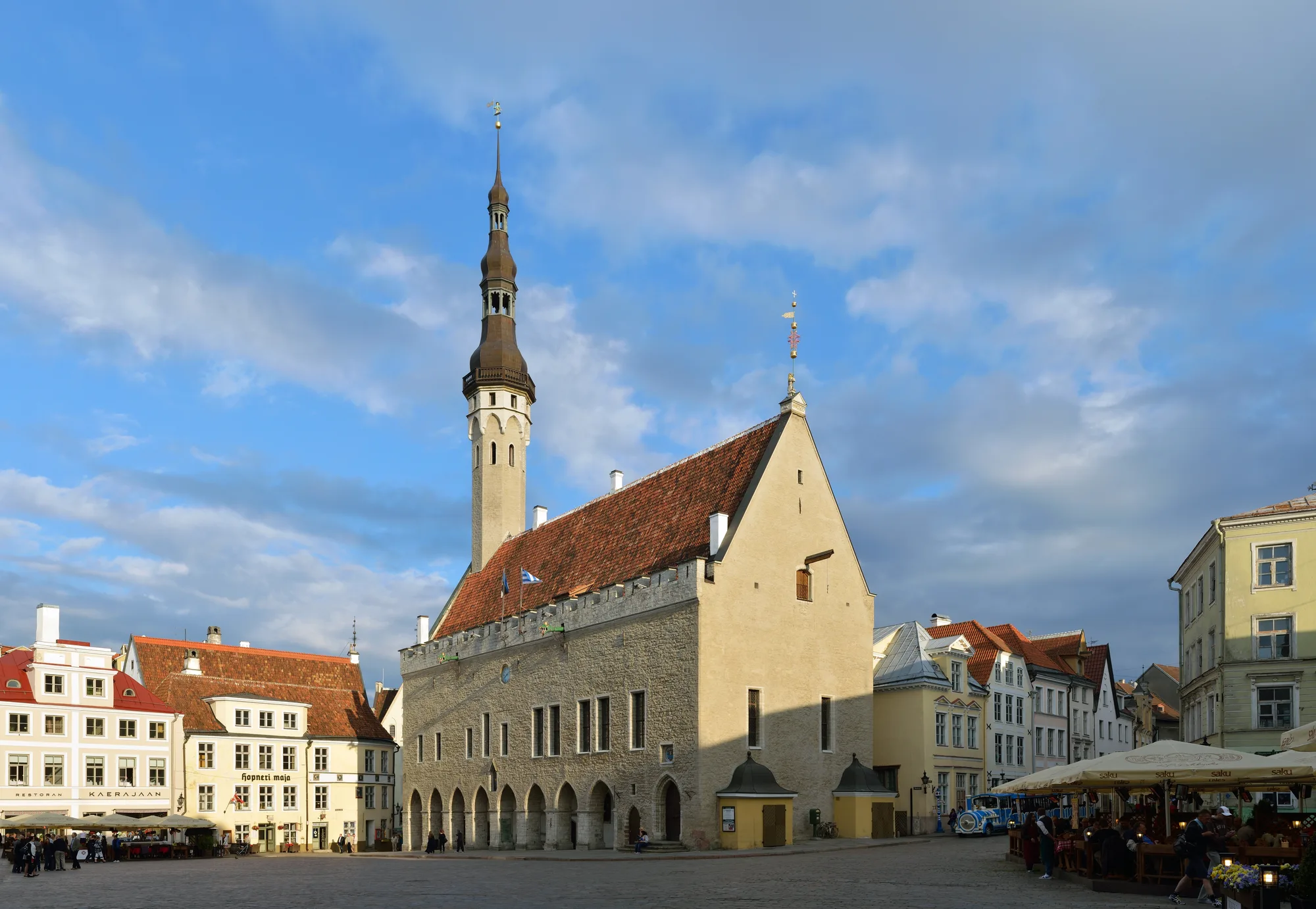
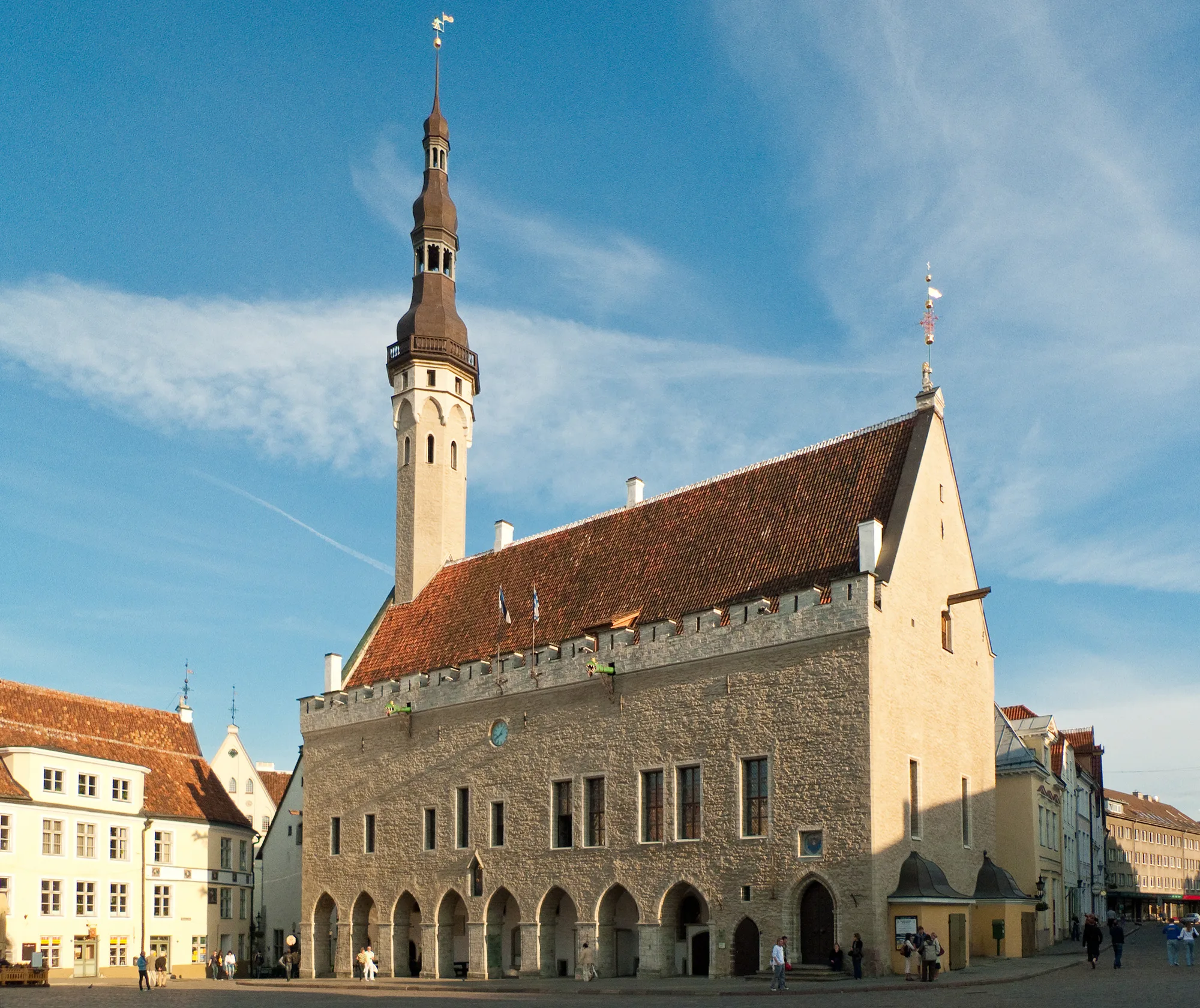
Make Town Hall Square (Raekoja plats) your first real pause. Look up: the Tallinn Town Hall on the south side is the only surviving Gothic town hall in Northern Europe, completed in 1404, and its slender tower is crowned by Old Thomas (Vana Toomas), the city's weather-vane guardian and unofficial mascot since 1530. This square has been the city's civic and commercial heart for over 700 years — markets, executions, fairs and the Christmas market have all happened on these same stones. Stand in the middle and you're at the literal centre of medieval Tallinn.
3) Take one texture detour
Add a lane that feels like Tallinn in one glance: St. Catherine’s Passage (Katariina käik). This narrow medieval alley runs along the old wall of the former Dominican monastery, with weathered limestone tombstones set into one side and the open workshops of the St. Catherine's Guild — potters, glassblowers, textile and jewellery makers working in view — on the other. It takes under a minute to walk end to end, but it's one of the most atmospheric corners in the whole city. Nearby Müürivahe street, running along the inside of the wall, is where you'll find the open-air Wall of Sweaters (Müürivahe knitwear market), woollen goods sold from stalls against the medieval rampart.
4) Choose a spire moment (optional)
If you want skyline drama, detour to St. Olaf’s Church (Oleviste kirik). Between roughly 1549 and 1625 its tower was, by some accounts, the tallest building in the world; today the spire reaches about 123 metres, and you can climb the tight internal staircase to a viewing gallery for one of the highest perspectives over the Old Town (tower access is seasonal — typically spring to autumn, weather permitting, so it's worth a quick check before you go). The climb is steep and not for the claustrophobic, but the reward is rooftops, sea and spires in every direction.
5) Climb to Toompea for the viewpoints
Head up to Toompea, the limestone hill that has been the seat of power in Tallinn since the Danes built a fortress here in 1219. You reach it by one of two historic passages: the Pikk jalg (Long Leg), a gentle cobbled ramp, or the steeper Lühike jalg (Short Leg), a stepped lane lined with craft shops. Once up top, do the two viewpoints:
- Kohtuotsa for the postcard rooftops — the classic frame of red-tiled roofs, church spires and a wedge of sea, with the city's modern skyline rising behind. This is the single most photographed spot in Tallinn for good reason.
- Patkuli for walls and depth — a different, more intimate angle looking down over a long stretch of intact city wall and towers, with the train station and harbour beyond.
6) Cathedral contrast (quick stops)
On your Toompea loop, add the two cathedrals for atmosphere — they sit only a couple of minutes apart and tell two very different stories:
- Alexander Nevsky Cathedral — the great onion-domed Russian Orthodox cathedral, completed in 1900 during the Russian Empire's rule; deliberately monumental, and a reminder of the layered powers that have governed this hill.
- St. Mary’s Cathedral (Toomkirik) — Estonia's oldest church, founded by the Danes in the 13th century, white and restrained inside, lined with the carved coats-of-arms and tombs of the Baltic German nobility.
Lower Town Details Worth Adding
If you have time and energy, a few short detours in the Lower Town reward the effort without pulling you far off the loop.
Pikk street (Long Street) runs the length of the Lower Town from Town Hall Square toward the sea gate, and it's effectively an open-air museum of Hanseatic merchant wealth. Look for the Great Guild Hall (now the Estonian History Museum), the ornate House of the Blackheads (the brotherhood of unmarried merchants), and the Three Sisters — a trio of joined medieval merchant houses now run as a hotel.
Fat Margaret and the sea gate. At the northern end of Pikk, the squat cannon tower known as Fat Margaret (Paks Margareeta) guards the old harbour entrance and houses the Estonian Maritime Museum. Walking out through the Great Coast Gate beside it is the historic way medieval traders entered the city from the port — doing the walk in this direction at the end gives a satisfying sense of arriving and leaving as merchants once did.
The town wall up close. Tallinn retains roughly 1.9 km of its medieval defensive wall and around 20 of its original towers — one of the most complete sets in Northern Europe. You can walk a stretch of the wall-walk and climb towers at sections like Kiek in de Kök and the connected Bastion Passages (the tunnels dug beneath the bastions), which also make an excellent rainy-hour anchor.
Coffee + Dessert Stops (Make the Walk Feel Romantic)
The best Old Town walks include a warm break. Choose one:
- Kehrwieder for coffee + chocolate energy, tucked into a cosy corner just off Town Hall Square
- Maiasmokk for a classic Tallinn sweet pause — Estonia's oldest café, trading since 1864, with a marzipan tradition that goes back centuries
More ideas, with opening hours and locations, in Best Cafes in Tallinn and Best Desserts in Tallinn.
Three Ways to Run This Route
Use the same anchors but tune the route to your time and mood.
The 90-minute essentials. Viru Gate → Town Hall Square → St. Catherine's Passage → up the Lühike jalg → Kohtuotsa viewpoint → back down. This is the smallest version that still feels complete, and it's the right call on a tight schedule or a layover.
The half-day classic (3–4 hours). The full route above, both viewpoints, both cathedrals, a tower climb at St. Olaf's or Kiek in de Kök, plus a proper coffee-and-cake stop. This is the version most people will want and the one this guide is built around.
The slow romantic loop. Run it in the early evening: do the Lower Town as the day-trippers leave, time the Toompea viewpoints for golden hour, then come back down into the Old Town for dinner as the lanterns come on. Pair it with the Walking Routes in Tallinn alternatives if you want to keep wandering after dark.
How to Finish the Day
After the Old Town loop, pick the finish that matches your mood:
- Classic Tallinn evening: dinner in Old Town (start with Best Restaurants)
- Modern contrast: drift to Rotermann Quarter
- Creative Tallinn: end in Telliskivi + Kalamaja
Stories to Carry on the Walk
A few legends and details make the lanes come alive — drop them in as you pass.
Old Thomas (Vana Toomas). The weather vane on the Town Hall tower depicts a guard, said to commemorate a commoner's son who won a popinjay (parrot) shooting contest the nobility expected one of their own to win. He's been watching over the city since 1530 and is its enduring symbol of the ordinary Tallinner.
The Devil's Wedding and the empty windows. Look up at the gable of one merchant house on Rataskaevu street: a permanently bricked-up window. The legend says the owner peeked in on a wild wedding party held there by the Devil and was warned never to look again — so the window was sealed for good.
The Pikk jalg gate. The Long Leg gate tower that separates the Lower Town from Toompea is a literal reminder that these were once two distinct, often rival jurisdictions — the merchants below and the nobility above — locked at night behind their own gates.
Linda's stone. On Toompea, the grieving figure of Linda — wife of the mythical hero Kalev — is said in the national epic to have carried the stones that formed the hill itself while mourning him. It's a quiet, moving stop that connects the medieval city to Estonia's older folklore.
The Walk Through the Seasons
The same route changes character completely across the year, and it's worth knowing what to expect.
Summer (June–August): long days, terrace cafés in full swing, and light that lingers past 22:00 — but also the busiest crowds and most cruise-ship traffic. Walk early or late to reclaim the quiet. See Tallinn in Summer.
Autumn (September–October): golden light, thinning crowds and crisp air make this arguably the best season for the walk. See Tallinn in Autumn.
Winter (November–February): short days and cold, but the Christmas market on Town Hall Square (typically late November into early January) turns the square magical, and fresh snow on the rooftops from Kohtuotsa is unforgettable. Dress for ice underfoot on the cobbles. See Tallinn in Winter.
Spring (March–May): quiet, fresh and uncrowded, with the city waking up and terraces reopening from April. See Tallinn in Spring.
Where the Best Photos Are (and When)
The walk doubles as a photo route, and a little timing makes a big difference.
- Kohtuotsa viewpoint at golden hour for the classic red-rooftop panorama; early morning gives soft side-light and far fewer people in the frame.
- Patkuli viewpoint in the late afternoon when the low sun rakes across the city wall and towers below.
- St. Catherine's Passage in flat, overcast light, which suits its narrow, shadowed lane better than harsh sun.
- Town Hall Square in early morning before the café tables and tour groups fill it.
- The "painted ladies" corner of pastel merchant houses near the square, and the view up at St. Olaf's spire from Pikk street.
For a fuller shot list, see Tallinn Photography Spots and Instagrammable Places in Tallinn.
Practical Notes (Cobbles, Hills, Weather, Money)
Footwear. The cobblestones are uneven and can be slick when wet; flat, grippy shoes beat anything with a heel. The Toompea passages add a short but real climb.
Accessibility. The Old Town is challenging for wheelchairs and prams — cobbles throughout and steep ramps up to Toompea — though the Pikk jalg ramp is gentler than the stepped Lühike jalg. See the Tallinn Accessibility Guide for routes and step-free options.
Weather. Tallinn weather turns quickly even in summer; carry a light waterproof layer year-round. If the rain sets in, pivot the walk into a museum-and-café day with the Rainy Day in Tallinn plan.
Money and stops. Cards are accepted almost everywhere, including small cafés; you rarely need cash. Public toilets are limited inside the walls, so use a café stop. Most churches ask a small entry or tower-climb fee — carry a few euros for that.
More Old Town Ideas
If you want more structure around this walk:
- 1 Day in Tallinn
- Weekend in Tallinn
- Walking Routes in Tallinn for other self-guided loops
- Instagrammable Places
Go here next
 Go here nextInstagrammable Places in TallinnTallinn’s most photogenic spots: Old Town rooftops, Toompea viewpoints, medieval gates, Kadriorg elegance, Telliskivi street art, and Baltic Sea lightGo here next1 Day in TallinnA beautiful one-day Tallinn plan: Old Town wandering, Toompea viewpoints, Kadriorg calm, and a modern neighborhood finish — with optional swaps for rainGo here nextBest Viewpoints in TallinnTallinn is a city of rooftops, spires, and sea horizons. Here are the best viewpoints in Tallinn — the classic Toompea platforms, skyline towers
Map
Tap markers to open linked guides.
Scroll to load the map
Map data © OpenStreetMap contributors, served by OpenFreeMap.
Nearby
FAQ
Is Tallinn Old Town walkable?
Yes. The Old Town is compact — only about 0.8 km across — and built for wandering. Expect cobblestones throughout and a short, steep climb when you go up to Toompea. The full loop in this guide is roughly 2.5 km and takes 2–4 hours with stops.
What’s the best time of day for an Old Town walking tour?
Early morning (before about 09:30) is the calmest, especially on cruise-ship days in summer. Golden hour is the most photogenic, particularly from the Toompea viewpoints — but check the day's sunset time, since in midsummer that's around 22:00 and in midwinter as early as 15:00.
How long does a self-guided Old Town walk take?
Plan for 2–4 hours. The route itself is short, but the time is mostly stops — photos, viewpoints, a coffee break, and ducking into a church or two. Add an hour or more if you climb St. Olaf's tower or visit a museum along the way.
Do I need a guide, or is self-guided fine?
Self-guided is genuinely fine here — the Old Town is small, well-signed and hard to get lost in. A guide adds depth on history and legends, but this route hits all the essentials on your own schedule. If you want company and stories, free walking tours also depart daily from near Town Hall Square; it's worth a quick look at the current meeting time when you plan.