
Quick facts
- Best for
- Photographers; viewpoints and street art
- Good to know
- Viewpoints: go early morning for fewer people, or golden hour


Old Town Rooftops & Lanes
Tallinn’s Old Town is basically a set: textures, arches, towers, and tiny streets that look great in any light.
Start your photo walk at Viru Gate and aim for quieter lanes off the main flow.
The reason the Old Town photographs so well is that it is genuinely old — these are real fourteenth- and fifteenth-century walls, gates and lanes, not a reconstruction — so the textures have depth and patina that no film set can fake. Work the details as well as the wide shots: a worn doorway, a hand-painted sign, lamplight on stone, an arch framing a spire down the street. The further you drift from the main commercial drag, the more the city opens up for you.
The Two Viewpoints to Prioritize
Tip: go early morning for fewer people, or golden hour for warm roofs.
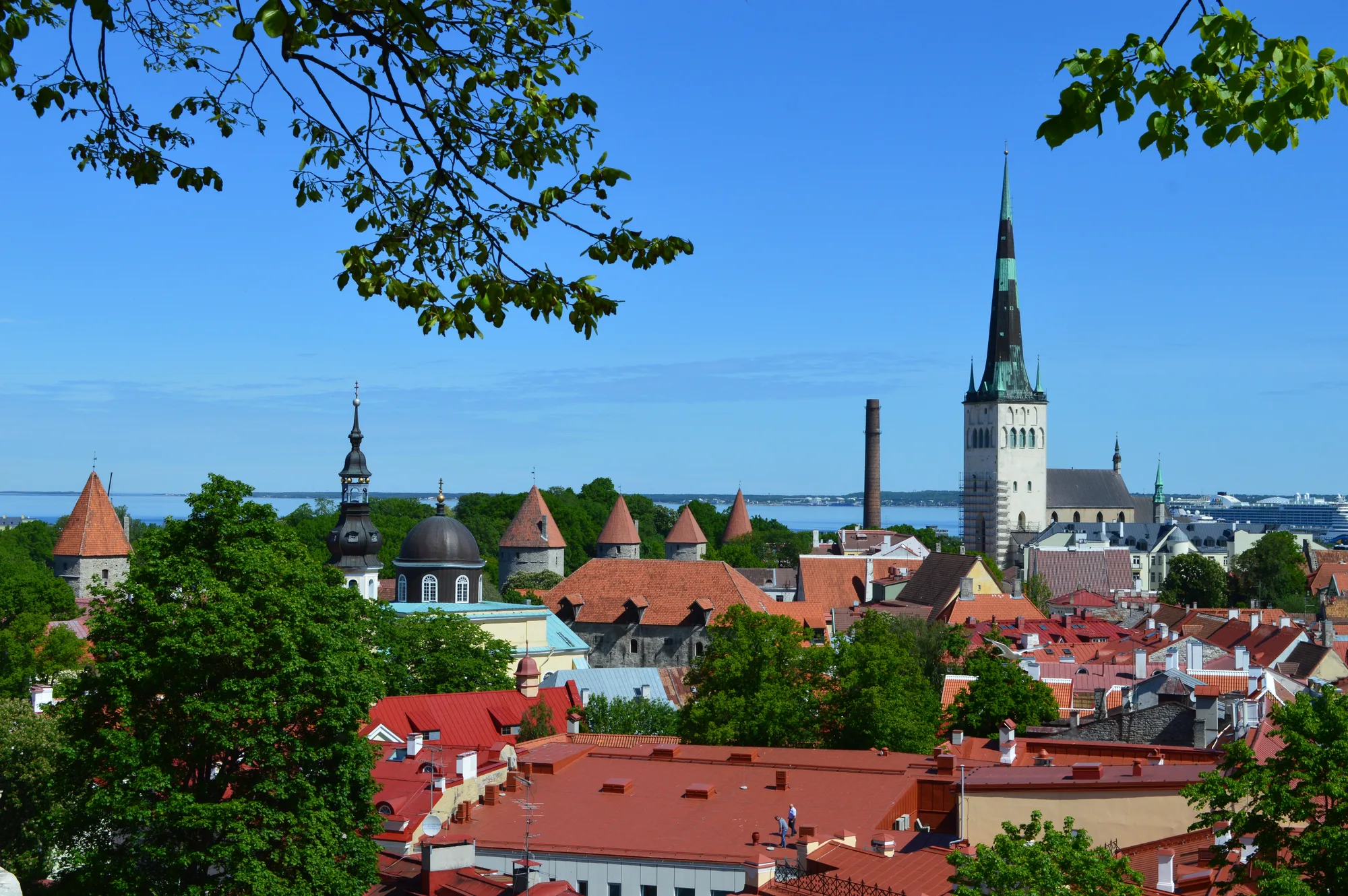
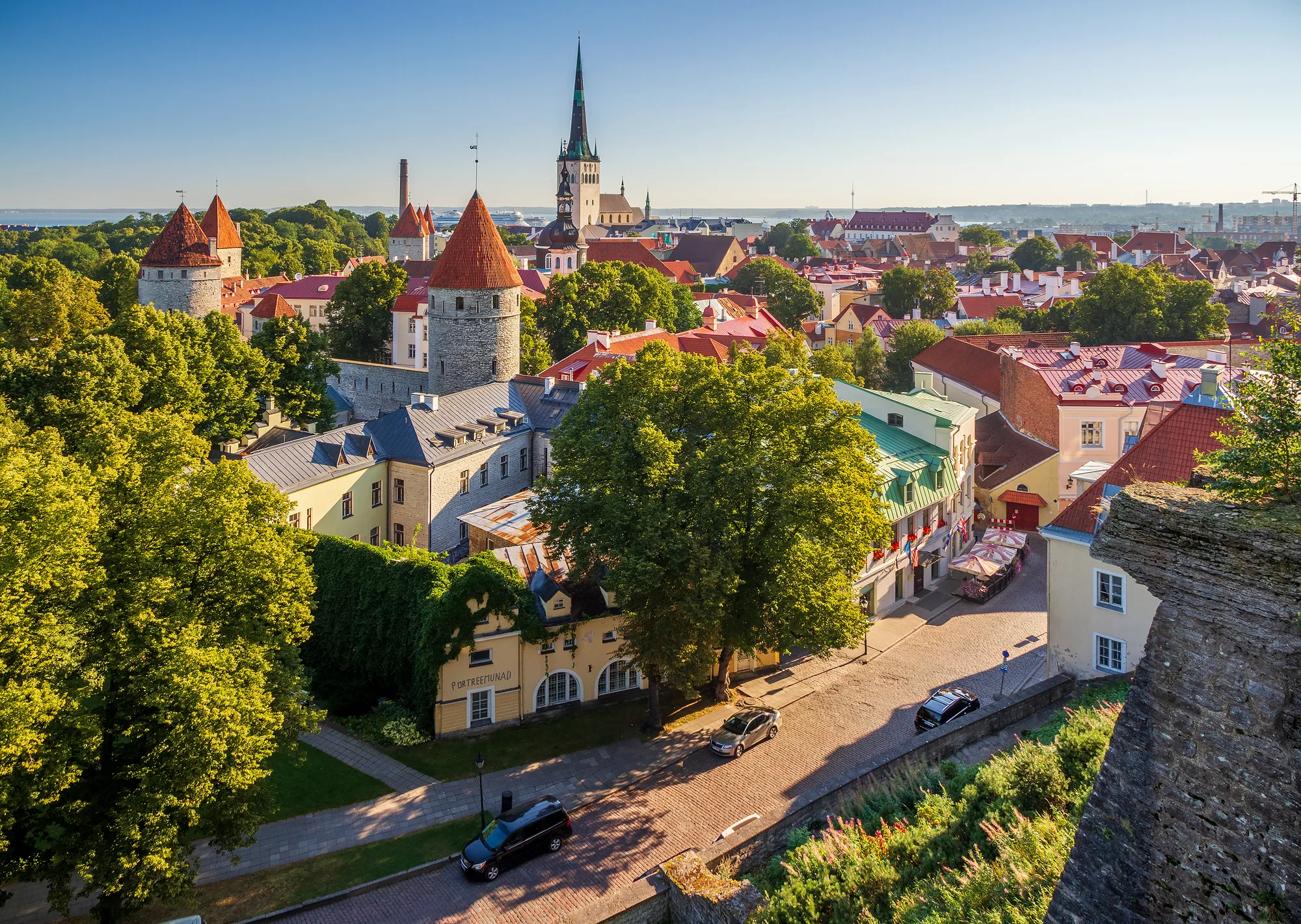
Both sit up on Toompea, are free, and stay open whenever you want them, so the only thing to plan is the timing. Kohtuotsa gives the open, postcard sweep of red roofs running down to the sea; Patkuli, a couple of minutes away, layers the medieval walls into the foreground for a more dimensional shot. Do both — the short walk between them is part of the pleasure — and the contrast gives you two genuinely different images of the same city.
Kadriorg Elegance + Telliskivi Grit
For contrast:
- Kadriorg gives you park paths and refined architecture.
- Telliskivi gives you street art and modern Tallinn cool.
These two make a great paired shoot precisely because they are opposites. Kadriorg is all symmetry and grace — baroque palace, formal avenues, fountains, seasonal flowerbeds — and rewards clean, composed frames. Telliskivi is raw and changeable: large murals against industrial brick, refreshed often, with creative-quarter energy. Shooting both in one afternoon gives your set range, and they are an easy tram-and-walk apart.
Baltic Sea Light
For moody, minimalist shots, take an evening walk by the water — Pirita for open sea, or Noblessner for marina lines.
The Baltic light has a soft, cool quality that suits minimalist, atmospheric photography — wide horizons, muted tones, and long reflections at dusk. Pirita gives you open sand and sea for clean, simple compositions; Noblessner offers the harder geometry of the marina and the reclaimed industrial architecture of the old submarine yard. Both are at their best as the sun drops, and both pair naturally with a quiet drink to end the day.
The Iconic Tallinn Shots (And How to Get Them)
A handful of images come to define almost everyone's Tallinn photos. Here is what they are and how to capture them well.
- The rooftop panorama. The classic — red-tiled roofs, church spires and a sliver of Baltic — is shot from Kohtuotsa on Toompea. Arrive early or at golden hour for warm light and fewer heads in the frame; the platform gets busy midday.
- The walls-and-towers angle. From Patkuli you get the medieval defensive walls in the foreground with the Lower Town beyond — more depth and drama than the open panorama.
- The medieval gateway. Viru Gate, with its two ivy-touched towers, is the quintessential "stepping into the Old Town" shot. It works in almost any light and frames people walking through beautifully.
- The narrow lane. St. Catherine's Passage is the most photogenic alley in the city — low arches, worn stone, artisan workshops. Go early for an empty frame.
- The onion domes. The Alexander Nevsky Cathedral on Toompea is endlessly photogenic, especially with the cobblestone square in front.
Light, Timing, and Seasons
In Tallinn, when you shoot matters as much as where.
Golden hour is long up here. Because the city sits so far north, summer evenings deliver an extended, soft golden light that flatters the limestone walls and red roofs. Plan your viewpoint visits for the hour before sunset and the colours do the work for you.
Early morning is the secret weapon. The Old Town before about ten in the morning is quiet and beautifully lit, with no crowds in your shots. The same lanes that feel congested at midday are serene and photogenic at eight.
Winter is dramatic. Snow on the medieval rooftops, frost on the cobbles, and the low, sharp winter sun make for striking, almost theatrical images — and far fewer people. The Christmas Market on Town Hall Square adds warm light and festive colour.
Blue hour and night. After sunset, the lit lanes, glowing windows and floodlit towers give moody, atmospheric frames. The Old Town is compact and safe to wander in the evening, so a short night-photo loop is easy.
Underrated Photo Spots
Beyond the obvious icons, these reward a wander.
- Kalamaja's wooden houses. Rows of pastel timber buildings, leaning slightly, with gardens and cats — a softer, more human side of the city that photographs wonderfully on a quiet morning.
- Telliskivi street art. Large-scale murals refreshed regularly, set against raw industrial brick. The alleys between the repurposed buildings act as natural gallery corridors.
- Kadriorg park and palace. Formal avenues, fountains and a baroque palace give you elegant, symmetrical compositions; spring tulips and autumn leaves add seasonal colour.
- Rotermann Quarter. Bold contemporary architecture grafted onto old industrial shells — a favourite for fans of clean lines and texture contrasts.
- The seaside. Noblessner offers marina reflections and industrial-modern lines; Pirita gives open Baltic horizons and minimalist beach light.
Practical Tips and Etiquette
A few notes to make a photo day smooth and respectful.
- Beat the crowds by timing, not elbows. Early morning and golden hour solve almost every congestion problem at the viewpoints and in the lanes.
- Watch your footing. You will be looking through a screen on uneven cobblestones — they are genuinely slippery when wet, so move carefully, especially on the Toompea slopes.
- Respect homes and worship. Kalamaja's wooden houses are people's homes, and the cathedrals are active places of worship; photograph considerately and follow any posted rules on interior photography.
- Mind the weather. A waterproof for your gear is wise in the shoulder seasons, and a lens cloth helps with sea spray near the water.
- Free and open. The best vantage points — the Toompea viewpoints — are free and always accessible, so there is nothing to book; just turn up at the right hour.
Go here next
 Go here nextTallinn Old Town Walking Tour (Self‑Guided)A self-guided Tallinn Old Town walking tour with the best lanes, viewpoints, and photo moments — designed to feel romantic and unrushed, not like a checklist.Go here nextBest Viewpoints in TallinnTallinn is a city of rooftops, spires, and sea horizons. Here are the best viewpoints in Tallinn — the classic Toompea platforms, skyline towersGo here nextBest Sunset Spots in TallinnWhere to watch sunset in Tallinn: Old Town viewpoints, sea-facing promenades, and modern waterfront edges — plus timing tips for long summer evenings.
FAQ
What is the most photogenic spot in Tallinn?
The Kohtuotsa viewing platform on Toompea, for the classic panorama of red-tiled roofs and church spires. Patkuli, a short walk away, gives a more dramatic angle with the medieval walls in the foreground. Both are free and open at any time.
When is the best light for photos in Tallinn?
Early morning gives you empty lanes and soft light; the long northern golden hour before sunset flatters the walls and rooftops. In summer the golden light lingers, and in winter the low sun plus snow can be especially dramatic.
Where can I photograph Tallinn's street art?
Telliskivi Creative City has the densest concentration of large-scale murals, refreshed regularly and set against industrial brick. The alleys between the converted buildings make natural gallery corridors. Pair it with Kalamaja's wooden houses for contrast.
Are there good photo spots away from the crowds?
Yes — Kalamaja's pastel wooden houses, the Rotermann Quarter's contemporary architecture, Kadriorg's palace and park, and the seaside at Noblessner and Pirita all reward a wander and see far fewer people than the Old Town viewpoints.