
Quick facts
- Time needed
- Half day
- Best for
- Spring for strongest flow; winter for ice
- Good to know
- Look-don't-climb, especially on winter ice



Quick Facts
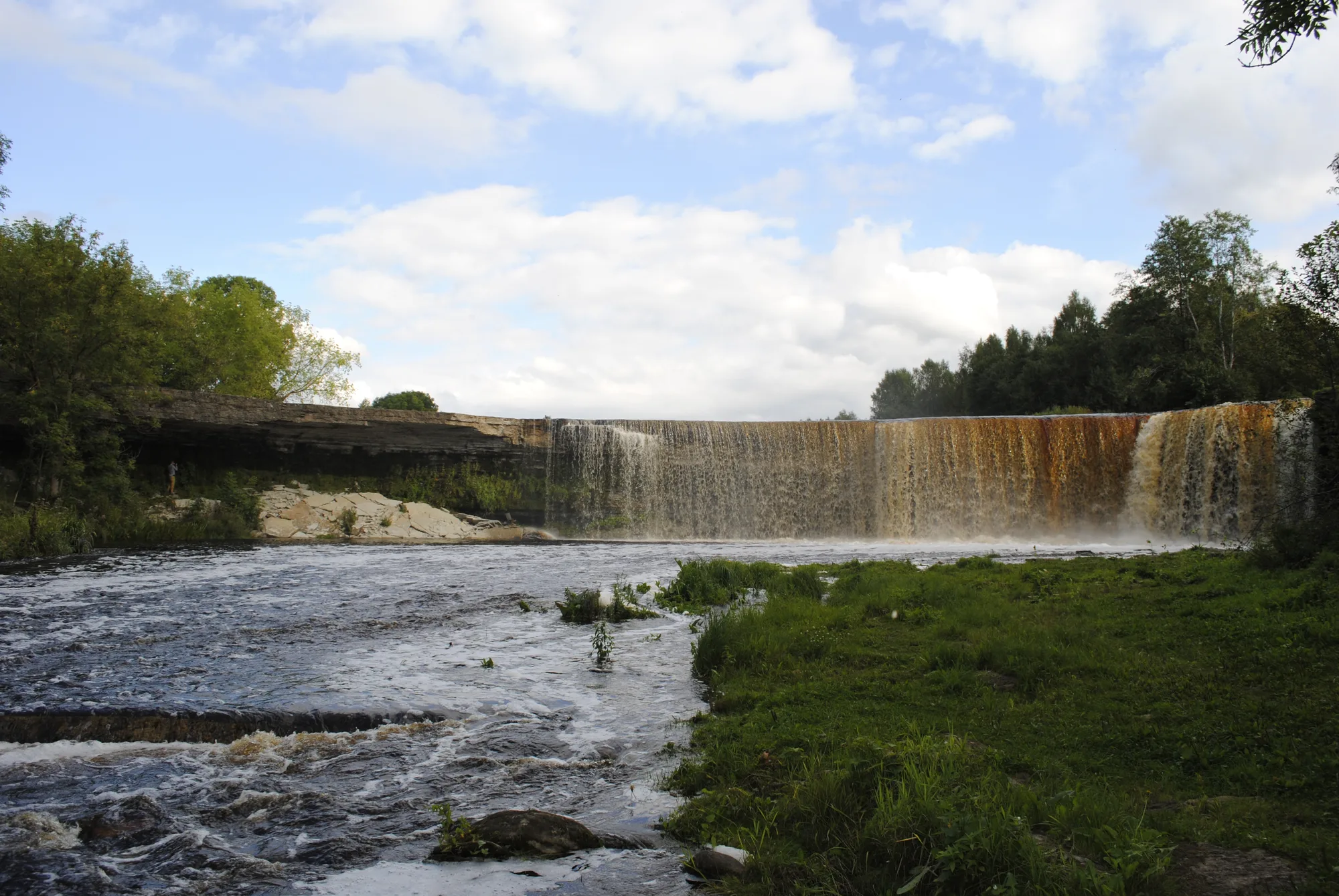
- Estonia’s widest natural waterfall: over 50m wide.
- Height: about 8m.
- Easy half‑day from Tallinn: great when you want nature without a big plan.
It’s located at Jägala‑Joa village on the Jägala River, not far from Tallinn — a strong “bonus nature” add‑on to a city weekend.
What It’s Like
Jägala is wide and satisfying: a broad curtain of water with a real roar in high‑water seasons.
In winter, the waterfall can form an impressive ice wall (and sometimes even an ice “tunnel” effect) — but conditions can be dangerous, so treat it as a look‑don’t‑climb destination.
Best Time to Visit
- Spring: often the most dramatic flow (snowmelt and higher water).
- Summer: calmer, easy to combine with a full Tallinn itinerary.
- Winter: atmospheric ice formations, but watch for slippery ground and unstable ice.
How to Visit (Simple Plan)
Treat Jägala as a half‑day reset:
- Go out → short walk + viewpoints → return to Tallinn
Then spend the rest of your day in a nearby “gentle” Tallinn area like Kadriorg or a more energetic one like Telliskivi.
Pair It With Another Easy Day Trip
If you want a second nature stop, choose one:
- Bigger nature day: Lahemaa National Park
- Another waterfall: Keila‑Joa Waterfall
More Info
- Visit Estonia: https://visitestonia.com/en/jagala-waterfall
- Background (Wikipedia): https://en.wikipedia.org/wiki/J%C3%A4gala_Waterfall
Getting There and Around the Falls
Jägala Waterfall sits at Jägala-Joa village on the Jägala River, east of Tallinn on the way toward Lahemaa — close enough to make a genuinely easy half-day:
- By car: the simplest option; there’s parking near the falls and only a short walk to the viewpoints.
- Guided tour: Jägala is sometimes bundled into Lahemaa or coastal tours.
- Public transport: more awkward as a standalone trip — a car or tour is the smoother choice.
A path lets you view the falls from above and, when conditions are safe and dry, from the gorge below — including the chance to walk behind the curtain of water in some seasons. Stick to marked paths and signage.
How It Changes Through the Year
Jägala is Estonia’s widest natural waterfall (over 50m across, about 8m high), and its character shifts dramatically with the seasons:
- Spring: snowmelt makes it loud and powerful — often the most impressive flow.
- Summer: gentler and easy to slot into a city itinerary; the area is pleasant for a short walk.
- Autumn: moody skies and fewer people.
- Winter: the falls can freeze into a spectacular ice wall, sometimes with an ice “tunnel” effect — beautiful, but the ice is unstable, so look, don’t climb.
Plan around Best Time to Visit Tallinn.
Combine It With
Because it’s only a half-day, Jägala pairs well with another stop or a relaxed Tallinn afternoon:
- A bigger nature day at Lahemaa National Park (it’s roughly on the way).
- The boardwalks of Viru Bog Trail.
- Back in the city, wind down in Kadriorg or grab coffee from Best Cafes in Tallinn.
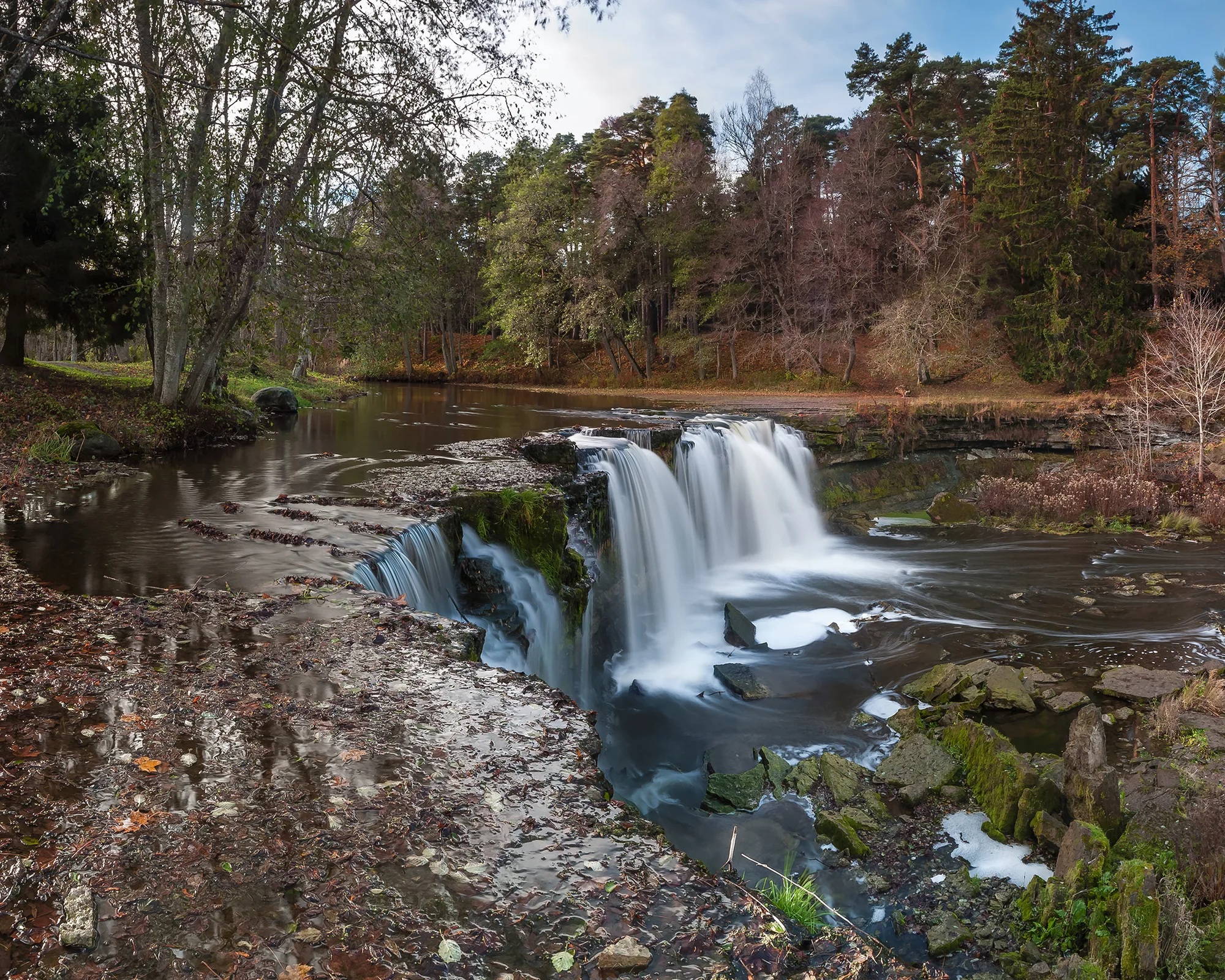
For another nearby cascade with a parkland feel, see Keila-Joa Waterfall.
Tips, Safety and Pairings
A short visit, but a few things make it better and safer:
- Stick to marked paths and viewpoints. The riverbanks and rocks can be slippery, and the area below the falls is hazardous in high water or icy conditions — admire, don’t scramble.
- Winter caution: the frozen ice formations are spectacular but unstable; never walk on or under them.
- Footwear: wear shoes that handle mud and uneven ground.
- Time needed: plan a relaxed half-day, including travel.
It pairs naturally with a broader nature day; the falls sit roughly on the way toward Lahemaa National Park and Viru Bog Trail.
When to Go for the Best Show
Jägala changes character completely through the year, so time your visit to the experience you want:
- Spring snowmelt brings the most thunderous flow — the falls are widest and loudest.
- Summer is gentle and the easiest to slot into a city break.
- Autumn adds moody skies and color along the river.
- Deep winter can freeze the curtain into a dramatic ice wall.
For planning around the seasons, see Best Time to Visit Tallinn.
Why Add Jägala to Your Trip
Jägala is the easiest “real waterfall” experience near Tallinn — a genuine, wide curtain of falling water that you can reach and enjoy in a half-day. As Estonia’s widest natural waterfall, it delivers an outsized sense of nature for very little effort, which makes it a perfect bonus stop on a city break or an add-on to a broader Lahemaa day. Spring snowmelt and winter ice are the showstopper seasons, but it’s satisfying year-round. Treat it as a quick reset between city days rather than a destination in itself, and you’ll come away glad you made the short trip.
Go here next
 Go here nextLahemaa National Park Day TripA Lahemaa day trip from Tallinn is the perfect nature add-on: forests, bog landscapes, and coastal Estonia. Here’s how to plan a calm, memorable day.Go here nextViru Bog Trail Day TripViru Bog (Viru raba) is one of the most iconic boardwalk walks in Estonia — a calm, photogenic Lahemaa day trip from Tallinn with a classic bog landscapeGo here nextKeila-Joa Waterfall Day TripKeila-Joa Waterfall is one of Estonia’s most famous waterfalls near Tallinn — a wide, photogenic cascade in a park setting that makes an easy half-day nature
Map
Tap markers to open linked guides.
Scroll to load the map
Map data © OpenStreetMap contributors, served by OpenFreeMap.
Nearby
Tallinn TV Tower
16.6 km away
Tallinn Botanic Garden
17.0 km away
Pirita Convent Ruins (St. Bridget’s Convent)
19.5 km away
Pirita
19.7 km away
Tallinn Airport to City Centre
20.0 km away
Estonian Song Festival Grounds (Lauluväljak)
21.1 km away
Kadriorg Japanese Garden
21.5 km away
Peter I House Museum (Peter the Great)
21.7 km away
FAQ
Is Jägala Waterfall worth it in winter?
Yes if you want dramatic ice formations close to Tallinn — but treat it as a viewpoint visit and be careful with slippery ground and unstable ice near the river.
How much time do you need for Jägala?
It works well as a half-day outing. Many visitors combine it with a Tallinn afternoon in Kadriorg or Telliskivi.